

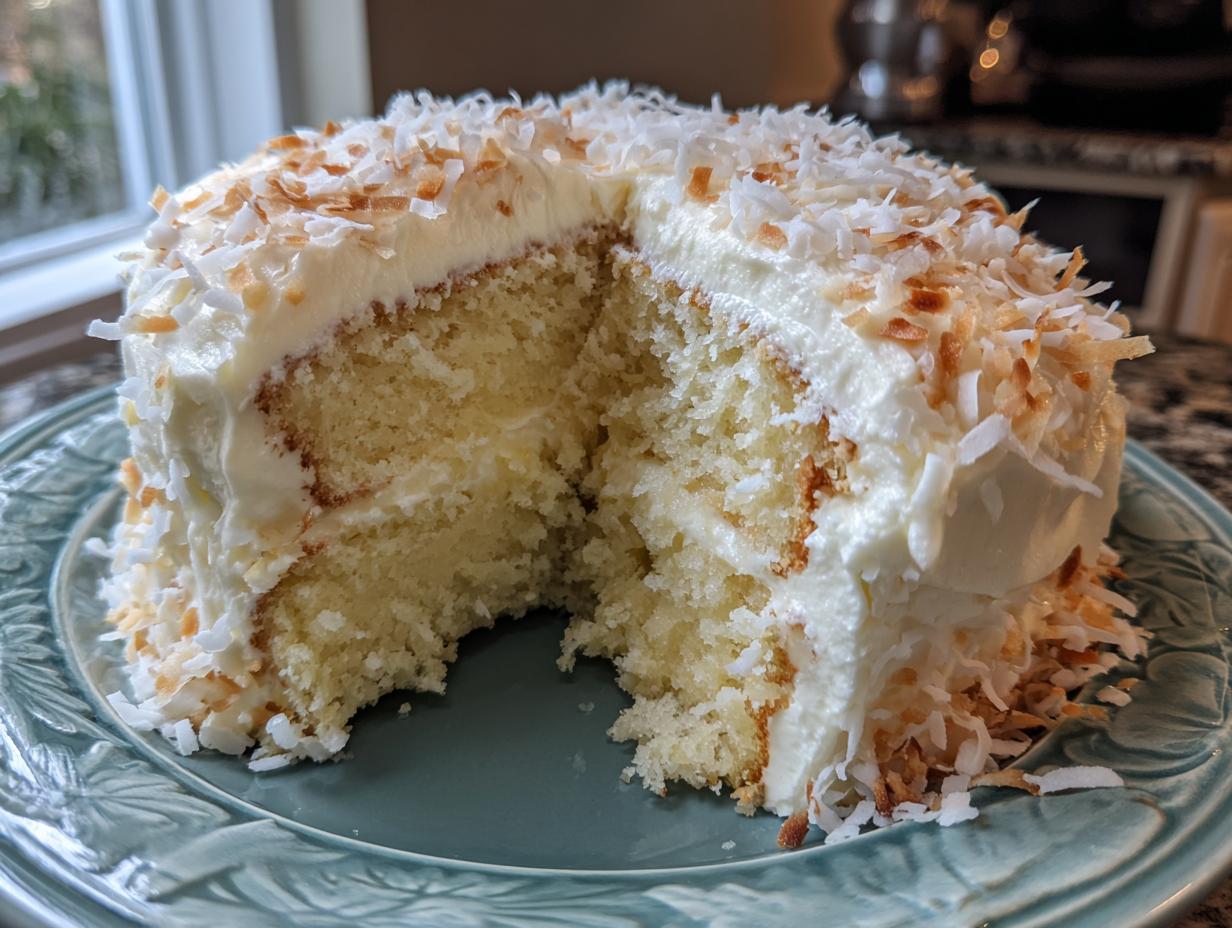
There is just nothing that beats the smell of a truly magnificent cake baking, is there? It instantly transforms your whole house into the warmest, happiest place on earth. If coconut is your weakness—and honestly, who hasn’t dreamt of that tropical, sweet aroma?—then you need this coconut cake recipe in your life. I’m not kidding when I say this is my benchmark for everything good in dessert: the ultimate moist and fluffy homemade coconut cake recipe, crowned with the richest, slightly tangy cream cheese frosting you’ll ever taste.
When I first perfected this version, it immediately became ‘The Cake’ at every family gathering. My Aunt Carol (who is a harsh critic, bless her heart) actually cried happy tears the first time she tried it! It’s pure Southern comfort baked into tender layers. We’ve tweaked it over the years, but the core promise remains: incredible texture and intense coconut flavor. You can find my original inspiration notes right here, but trust me, this final version is the only one you’ll ever need!
- Why This is the Best Coconut Cake Recipe for Your Kitchen
- Gathering Ingredients for Your Homemade Coconut Cake Recipe
- Step-by-Step Instructions for the Ultimate Coconut Cake Recipe
- Tips for a Perfect Southern Coconut Cake Recipe
- Variations on the Classic Coconut Cake Recipe
- Serving Suggestions for Your Decadent Coconut Dessert
- Storage and Reheating Instructions for Leftover Coconut Cake Recipe
- Frequently Asked Questions About This Coconut Cake Recipe
- Understanding the Nutrition in Your Homemade Coconut Cake
Why This is the Best Coconut Cake Recipe for Your Kitchen
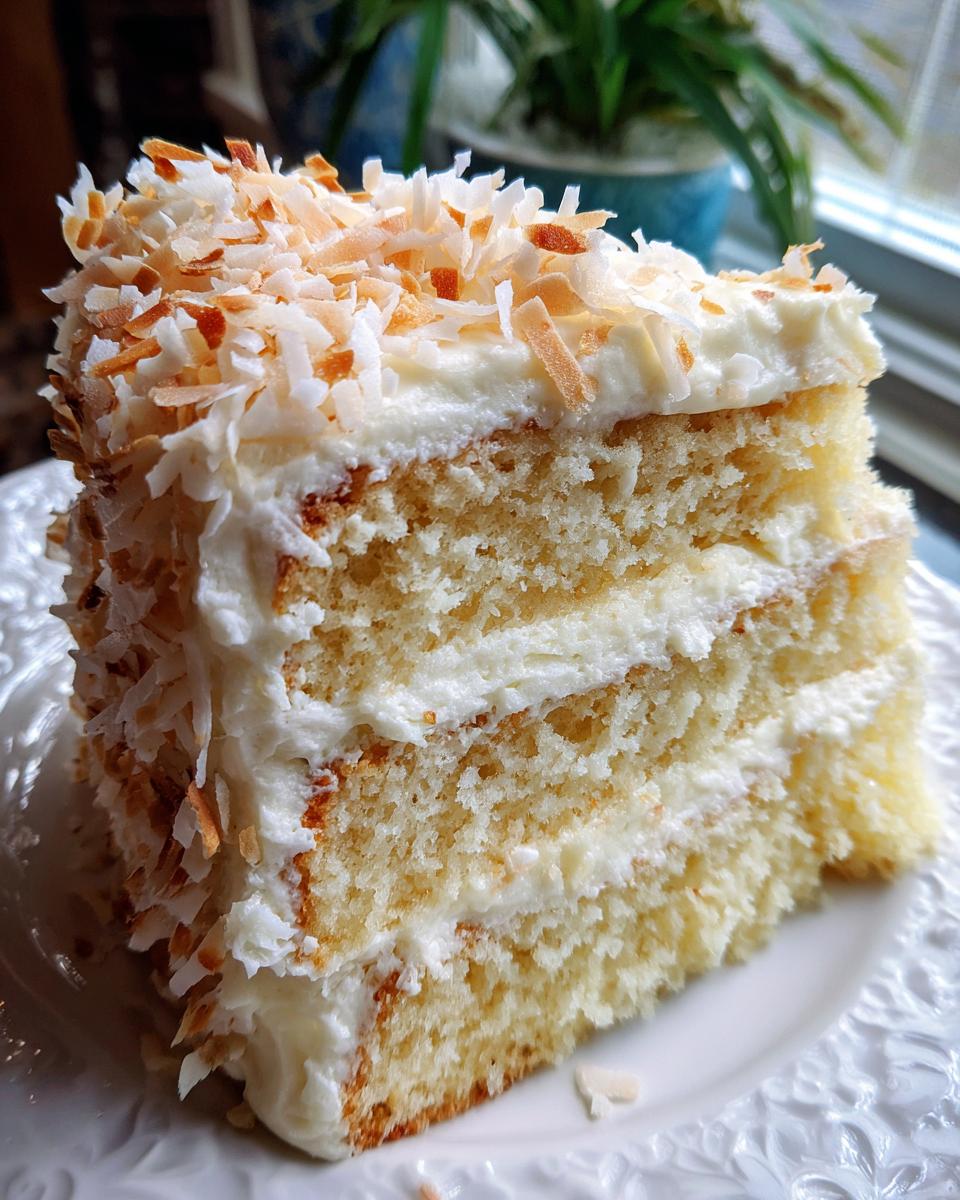
Folks, if you’re hunting for that elusive bakery style coconut cake texture, stop searching! This recipe guarantees a moist coconut cake that stays tender for days. It’s decadent—truly a coconut lover’s dream cake—because we load the batter and the frosting with flavor. My secret to maximizing that tropical punch is infusing the milk. Before you even start mixing, warm your milk slightly and stir in a couple of tablespoons of the shredded coconut, letting it steep while you gather everything else. It really amps up that coconut essence! Before you know it, you’ll have the best coconut cake recipe ever.
Achieving That Signature Moist Coconut Cake Texture
You might think adding liquids makes a cake moist, and you’d be right, but technique matters more! We use full-fat coconut cream here instead of just milk, which adds necessary richness for a fluffy coconut cake. Also, we mix that butter and sugar until it’s practically pale before adding anything else. That creaming action whips air right into the base. When those dry ingredients hit, we mix minimally—just until it barely comes together—to avoid developing tough gluten strands. That’s how you keep it fluffy, not chewy! For other creamy favorites, check out how I get my fluffy creamy scrambled eggs.
Gathering Ingredients for Your Homemade Coconut Cake Recipe
Alright, pull out your favorite mixing bowls, because setting up your ingredients correctly is half the battle won when making a true coconut cake from scratch. This isn’t an emergency cake mix situation; this is the real deal, and we want it to taste like a dream. Since we’re aiming for that ultimate fluffy texture, make sure your butter and cream cheese are actually soft—not melted, just pliable enough that you can press into them easily. Also, go for the good vanilla and coconut extracts here; they make a huge difference in that intense tropical flavor we’re aiming for, which is super important for a bakery style coconut cake finish!
If you’ve ever struggled with thin, sloppy frosting, you know how important that setup is. For a quick reminder on getting a perfect vanilla base, you can check out my guide to vanilla buttercream, though we’ll be tweaking this frosting to be coconut heaven shortly.
Ingredients for the Fluffy Coconut Layer Cake
Here’s what you need to gather up for the actual cake layers. It looks like a lot of standard baking items, but the coconut cream and extracts change everything!
- 1 3/4 cups all-purpose flour
- 1 3/4 cups granulated sugar
- 1 tablespoon baking powder
- 1/2 teaspoon salt
- 1 cup unsalted butter, softened (remember: softened!)
- 4 large eggs
- 1 cup whole milk
- 1/2 cup coconut cream (that thick stuff from the top of a can of full-fat coconut milk)
- 1 teaspoon vanilla extract
- 1 teaspoon coconut extract
- 1 cup sweetened shredded coconut (this goes right into the batter!)
- 1/2 cup sweetened shredded coconut (this is reserved for toasting and topping)
For the Creamy Coconut Cream Cheese Frosting
This frosting is crucial—it’s creamy, it’s rich, and that little tang from the cream cheese balances the intense sweetness of the coconut perfectly. Make sure everything here is at room temperature so you don’t end up with lumps!
- 8 ounces cream cheese, softened
- 1/2 cup unsalted butter, softened
- 4 cups powdered sugar, sifted (don’t skip the sifting!)
- 1 teaspoon vanilla extract
- 1/2 teaspoon coconut extract
- 2 tablespoons milk or cream (just a bit to get the right flow)
Step-by-Step Instructions for the Ultimate Coconut Cake Recipe
Okay, deep breaths! It’s time to bring these gorgeous ingredients together. Don’t be intimidated by the layers; we’re going to take this slow and steady. First things first, get that oven cranked up to 350°F (175°C). I always grease two 9-inch round pans and then cut parchment paper circles to fit the bottom—this step is non-negotiable insurance against sad, stuck cake bottoms! Let’s get mixing.
Mixing the Moist Coconut Cake Batter
You want that fluffy texture, so we start by treating the butter and sugar like delicate gold. Use your mixer to beat the softened butter with the dry ingredients—the flour, sugar, baking powder, and salt—until it looks like damp sand. See how that lightens the mix? Now, gently whisk your eggs, milk, coconut cream, and extracts together in a separate bowl. Add the wet mixture to the dry ingredients slowly, mixing only on low speed. Seriously, stop mixing the second you don’t see any more flour streaks! We’re keeping that gluten tight and happy so we get a moist coconut cake. Finally, fold in that cup of shredded coconut by hand with a spatula.
Baking and Cooling the Coconut Cake Layers
Divide that beautiful batter evenly between your prepared pans and pop them into the oven for about 30 to 35 minutes. You’re looking for that wooden pick test—if it comes out clean or with just a few moist crumbs clinging to it, you’re gold. Let those layers chill out in their pans for about ten minutes before you flip them onto a wire rack. They have to be completely cool before we touch that frosting, or disaster strikes, trust me!
Preparing and Assembling the Coconut Cake with Cream Cheese Frosting
While we wait for cooler layers (the hardest part!), whip up that frosting! Beat the cream cheese and butter until blissfully smooth, then add the powdered sugar gradually until it’s light and fluffy. Now it’s assembly time! Place your first layer down, spread about a third of that creamy frosting on top, then place the second layer on. Frost the whole beautiful thing—top and sides! For the grand finale, press that reserved half-cup of coconut all over the sides and top. I like to toast mine lightly first—it brings out such a warm, nutty flavor! That’s how you get that perfect, celebratory look.
Tips for a Perfect Southern Coconut Cake Recipe
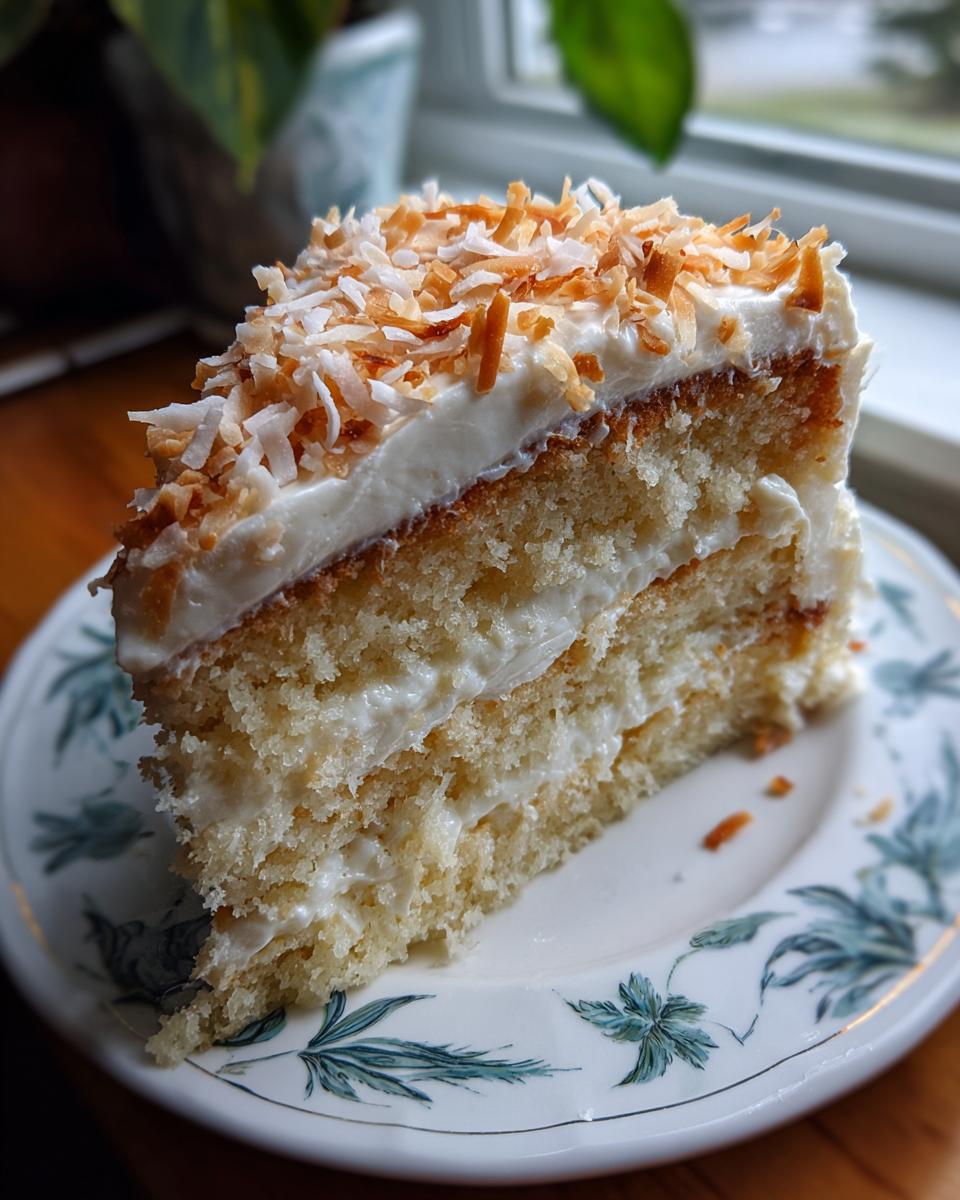
Now that you have the steps down, let me give you a few little secrets that turn a good layer cake into a legendary one—the kind of Southern coconut cake that people talk about for years! The single biggest thing is temperature control. If your butter isn’t perfectly soft for the cake and the frosting, you are fighting an uphill battle instantly. You want that velvety smooth base, not a lumpy mess.
Also, remember those notes I had about boosting flavor? Don’t skip soaking your shredded coconut topping if you have time. If you really want that extra-moist feel, you can create a simple soaking syrup using equal parts water, sugar, and coconut milk, warming it just until the sugar dissolves. Gently brush that over the cooled cake layers before you frost them. It absorbs right in! It’s like giving the cake an extra drink of tropical goodness before it heads to the party. For tips on mastering fluffy bread textures, you might want to read my guide on milk bread tangzhong.
Variations on the Classic Coconut Cake Recipe
The beauty of a fantastic base like this coconut cake recipe is how easily you can pivot to create something totally new while keeping that core moist texture we worked so hard for! If you’re needing something slightly lighter for a summer picnic, try swapping out the cream cheese frosting entirely.
For a true coconut cream cake feel—think airy, cloud-like—you can substitute the frosting with freshly whipped heavy cream stabilized with a bit of powdered sugar and a splash of coconut extract. Wow, that lightens things up substantially! Or, if you’re leaning into that rich, nostalgic vibe, you can certainly aim for an old-fashioned coconut cake by ditching the heavy frosting entirely and just using simple boiled custard or a lighter glaze, though honestly, I think the cream cheese version is just too good to skip.
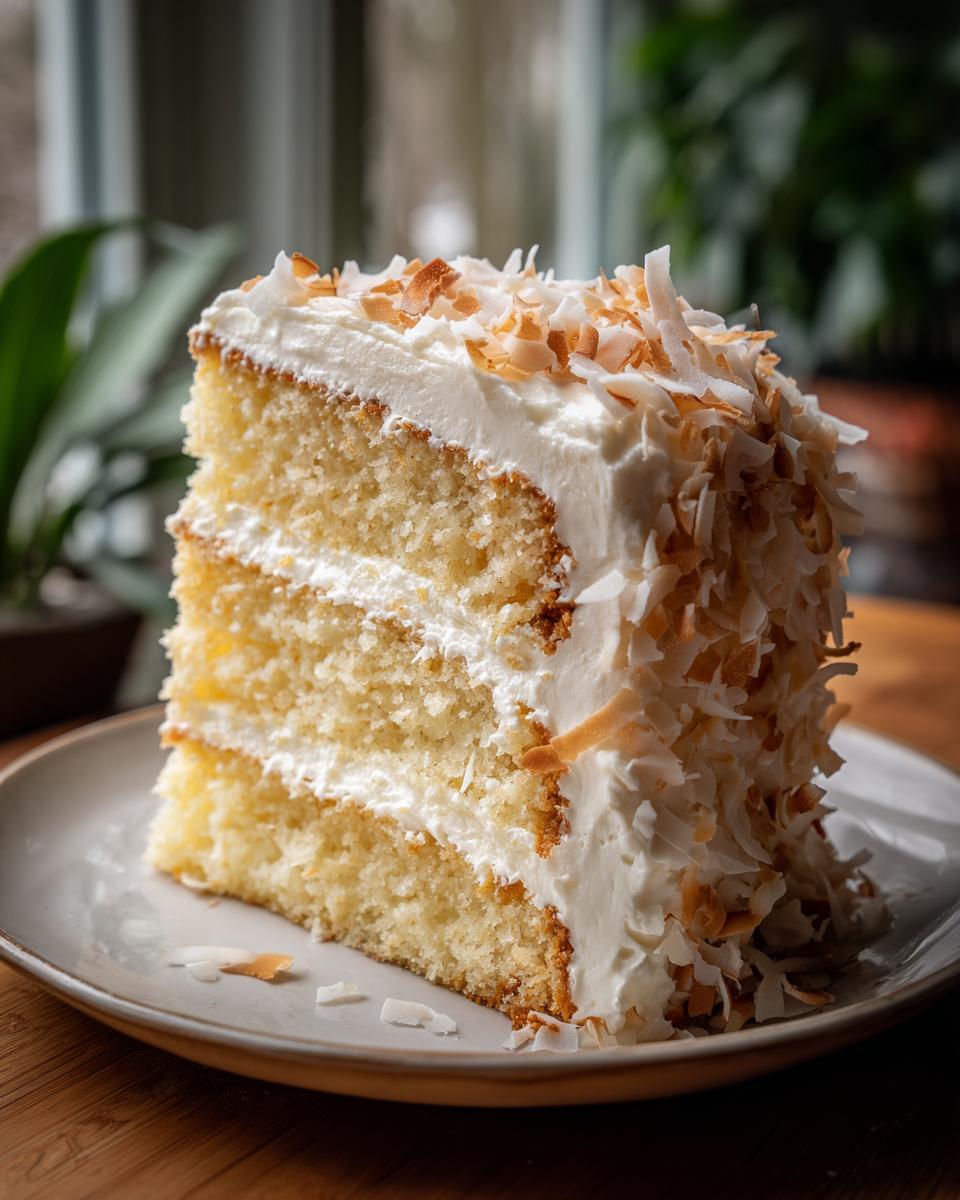
We’ve even done a quick version similar to a poke cake sometimes when we are short on time! Instead of layering and frosting like normal, once the cakes are fully cooled, just poke holes all over them with a fork and pour a mixture of warmed coconut milk and regular milk over the top before chilling. Let it soak in, then frost lightly. It turns into this incredibly tender, slightly gooey dessert! If you’ve had success with other moist swaps, like my zucchini banana bread, you already know how a simple liquid injection can change the game!
Serving Suggestions for Your Decadent Coconut Dessert
Now that you have this absolute stunner of a cake cooling, you need to think about what you’re going to serve with it! This rich, tropical sweetness sings all by itself, but dressing up the table just makes the occasion that much more special.
For those big holiday gatherings you mentioned, like Easter brunch or Mother’s Day tea, keeping the sides simple lets this cake be the absolute star. We usually just present it with a simple side of fresh fruit. Think bright colors that contrast those snowy white layers! Strawberries, raspberries, or maybe some juicy pineapple chunks cut into little spears just look so elegant next to it. It cuts right through the richness of that cream cheese frosting perfectly.
If you’re feeling really fancy, a tiny drizzle of passion fruit reduction over the side of the plate can offer an unexpected bright tang. But honestly, this cake holds its own. If you’ve already mastered my recipe for best classic apple crisp, you know sometimes the simplest presentation is truly the best. Just dust the plate with a little extra toasted coconut from the topping, slice your wedge, and watch everyone grab their forks!
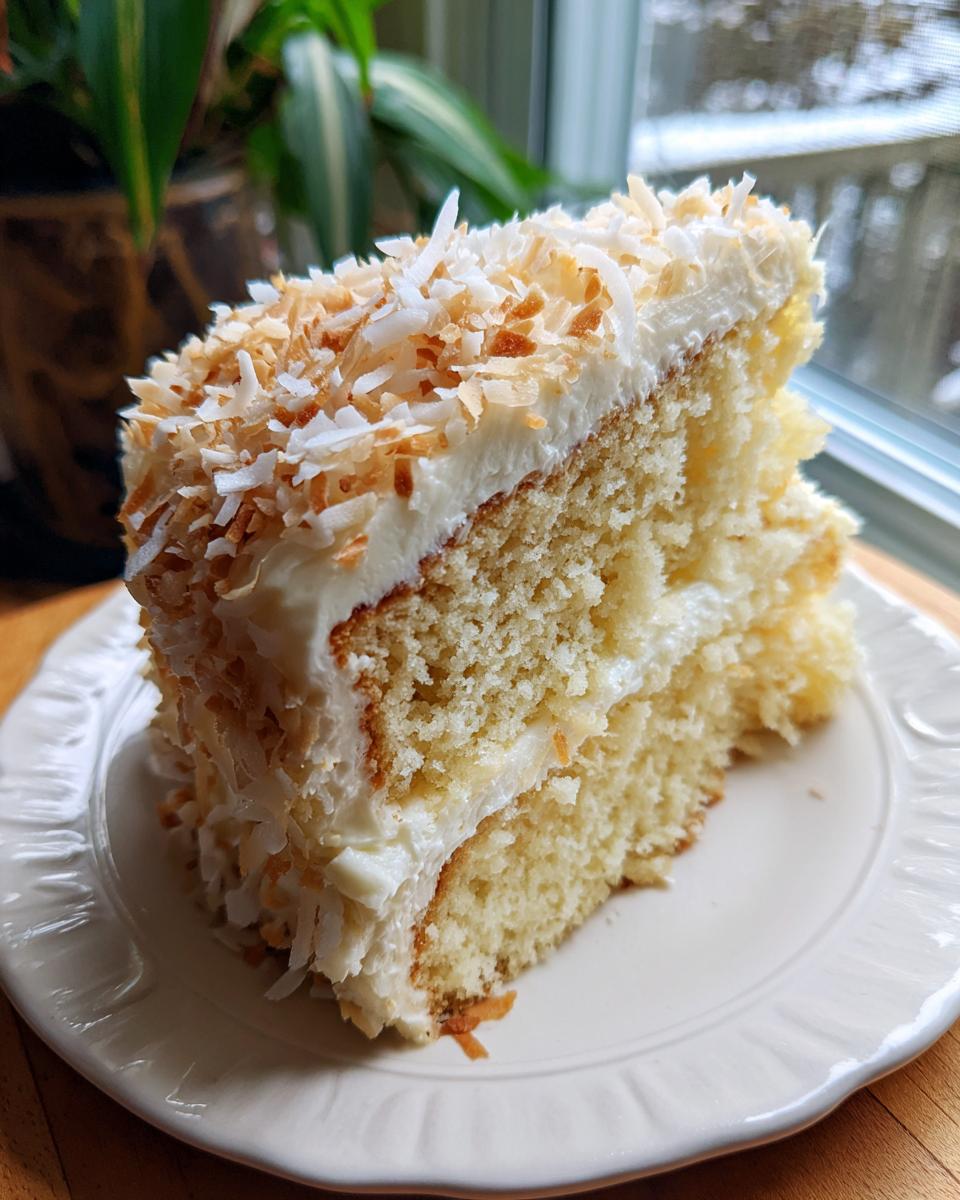
Storage and Reheating Instructions for Leftover Coconut Cake Recipe
Listen, this coconut cake recipe is so good that you might actually have leftovers—which is kind of shocking, honestly! But since we used that glorious cream cheese frosting, we can’t just leave it sitting on the counter like some buttercreams. You absolutely need to get any frosted pieces into an airtight container and into the refrigerator. It’ll keep beautifully for about three to four days wrapped up tight.
Now, here’s the important part: texture! Cream cheese frosting gets stiff and slightly dull when it’s fridge-cold, and those lovely cake layers stiffen up too. Never serve this coconut cake straight from the fridge!
The trick to reviving that soft, fluffy texture we worked so hard for is simple patience. Take your slice out of the fridge about 45 minutes before you plan on serving it. Let it sit on the counter under a cake dome or under a loose piece of foil. This gentle warming allows the butter and cream cheese in the frosting to soften perfectly, bringing back that melt-in-your-mouth tenderness. It’s worth the wait, trust me!
If you have a massive chunk left and can’t wait that long, you can warm an individual slice *very* carefully in the microwave—just 5 to 7 seconds on low power usually does the trick to take the chill off. But if you’re looking for no-fuss desserts for later, I highly recommend checking out my recipe for easy no-bake eclair cake, which is fantastic straight from the fridge!
Frequently Asked Questions About This Coconut Cake Recipe
It’s natural to have questions when you’re tackling a big celebration cake like this one! I get asked variations of the same few things all the time, usually revolving around substitutions or how to guarantee that amazing texture. Let’s tackle the most common concerns right here so you can walk into your kitchen feeling confident about making this easy coconut cake!
Can I use coconut milk instead of coconut cream in this coconut cake recipe?
Oh, that’s a great question about keeping it moist! You absolutely can—but you have to be deliberate about it. Remember, the coconut cream is that super-thick layer that separates at the top when a can of full-fat coconut milk chills overnight, right? If you only have canned coconut milk, you need to chill that whole can overnight, scoop *only* the thick solidified cream off the top for the recipe, and reserve the watery liquid left behind. If you can’t separate the cream, just use regular canned coconut milk instead of whole milk in the batter, but know that your cake won’t be quite as rich. This is key for making a truly moist coconut cake!
What if I absolutely hate shredded coconut in the actual cake batter?
I get it, some folks only want the coconut flavor *on* the outside! You can skip folding the one cup of sweetened shredded coconut into the batter entirely. Skip it, and you’ll still get a fantastic cake base. However, that coconut does contribute a little texture and depth. If you omit it, I highly recommend doubling up on both the vanilla and coconut extracts in the batter to boost the flavor intensity you’re losing slightly.
Do I *have* to toast the coconut topping?
Nope, you don’t *have* to, but goodness gracious, you should! Toasting the coconut is when the magic happens. It brings out the natural sugars and adds this lovely warmth and nuttiness that contrasts beautifully with the sweet, slightly tangy frosting. It only takes five minutes in the oven, and it makes the difference between a good-looking cake and a phenomenal-smelling, phenomenal-tasting one. It’s an absolute must for that authentic Southern flavor!
Can I substitute the cream cheese frosting on this coconut cake recipe?
You certainly can swap it out if you need to! The cream cheese frosting is classic because it offers that sophisticated little tang that cuts through all that richness, which really enhances the overall experience of a Southern coconut cake. If you aren’t feeling it, though, a super fluffy Swiss Meringue Buttercream is amazing—it’s lighter and less sweet. You could also make a simple glaze using powdered sugar, coconut extract, and just enough milk or even extra coconut cream to make it pourable. But seriously, give the cream cheese version a try first; it’s truly exceptional.
If you are looking for other reliable recipes that deliver on flavor without stress, I swear by my method for making easy creamy chicken enchiladas; sometimes the easiest stuff is the best comfort food!
Understanding the Nutrition in Your Homemade Coconut Cake
Now, let’s talk fuel! I know when we are baking something this absolutely decadent, we aren’t exactly aiming for a health food award, but I always like to give you a general idea of what you’re diving into here. We worked really hard to make this the most delicious, tender cake possible, and that usually means a little more butter and sugar—and that’s okay! Dessert is about joy, right?
I ran the numbers based on standard measurements for a slice of this amazing cake. Remember, since we are making this homemade coconut cake completely from scratch, the actual nutritional values can shift a bit depending on the brands of coconut cream or butter you use. These figures are just a good ballpark estimate for one generous slice.
- Serving Size: 1 slice
- Calories: Around 450
- Total Fat: Roughly 24g (that 15g of saturated fat is the delicious butter and cream cheese talking!)
- Carbohydrates: About 60g
- Sugar: This comes in around 55g, which is expected for a celebration cake this sweet.
- Protein: About 5g
See? It’s a splurge, but what a spectacular one! A slice of this beauty pairs perfectly with a simple cup of coffee or just a moment of quiet appreciation for what you just baked. Enjoy every bite without a shred of guilt!
PrintUltimate Moist and Fluffy Homemade Coconut Cake with Cream Cheese Frosting
This recipe delivers a truly moist and fluffy coconut cake from scratch, featuring layers infused with coconut flavor and topped with a rich, creamy coconut cream cheese frosting. It brings Southern charm to your table for any celebration.
- Prep Time: 25 min
- Cook Time: 35 min
- Total Time: 60 min
- Yield: 12 servings 1x
- Category: Dessert
- Method: Baking
- Cuisine: American
- Diet: Vegetarian
Ingredients
- 1 3/4 cups all-purpose flour
- 1 3/4 cups granulated sugar
- 1 tablespoon baking powder
- 1/2 teaspoon salt
- 1 cup unsalted butter, softened
- 4 large eggs
- 1 cup whole milk
- 1/2 cup coconut cream (from a can of full-fat coconut milk)
- 1 teaspoon vanilla extract
- 1 teaspoon coconut extract
- 1 cup sweetened shredded coconut (for batter)
- 1/2 cup sweetened shredded coconut (for topping, toasted)
- For Cream Cheese Frosting: 8 ounces cream cheese, softened
- 1/2 cup unsalted butter, softened
- 4 cups powdered sugar, sifted
- 1 teaspoon vanilla extract
- 1/2 teaspoon coconut extract
- 2 tablespoons milk or cream
Instructions
- Preheat your oven to 350°F (175°C). Grease and flour two 9-inch round cake pans. Line the bottoms with parchment paper.
- In a large bowl, whisk together the flour, sugar, baking powder, and salt.
- Add the softened butter to the dry ingredients. Beat with an electric mixer on low speed until the mixture resembles coarse crumbs.
- In a separate bowl, whisk together the eggs, whole milk, coconut cream, vanilla extract, and coconut extract until combined.
- Gradually add the wet ingredients to the dry ingredients, mixing on low speed until just combined. Do not overmix.
- Gently fold in the 1 cup of shredded coconut for the batter.
- Divide the batter evenly between the prepared cake pans.
- Bake for 30 to 35 minutes, or until a wooden pick inserted into the center comes out clean.
- Let the cakes cool in the pans for 10 minutes before inverting them onto a wire rack to cool completely.
- While the cakes cool, prepare the frosting: Beat the softened cream cheese and butter together until smooth.
- Gradually add the powdered sugar, mixing until fully incorporated. Beat in the vanilla extract, coconut extract, and milk until the frosting is light and fluffy.
- Once the cakes are completely cool, place one layer on a serving plate. Spread about one-third of the frosting evenly over the top.
- Place the second cake layer on top. Frost the top and sides of the entire cake with the remaining frosting.
- Press the reserved 1/2 cup of shredded coconut onto the top and sides of the cake. For extra flavor, toast this coconut lightly before applying.
- Chill the cake briefly before slicing for cleaner cuts.
Notes
- To toast the shredded coconut, spread it in a single layer on a baking sheet and bake at 350°F (175°C) for 5-8 minutes, watching closely to prevent burning.
- For an extra coconut flavor boost, you can soak the cooled cake layers with a simple syrup made from equal parts water, sugar, and coconut milk before frosting.
- This cake pairs well with a cup of coffee or a glass of cold milk.
Nutrition
- Serving Size: 1 slice
- Calories: 450
- Sugar: 55g
- Sodium: 250mg
- Fat: 24g
- Saturated Fat: 15g
- Unsaturated Fat: 9g
- Trans Fat: 0.5g
- Carbohydrates: 60g
- Fiber: 2g
- Protein: 5g
- Cholesterol: 85mg