

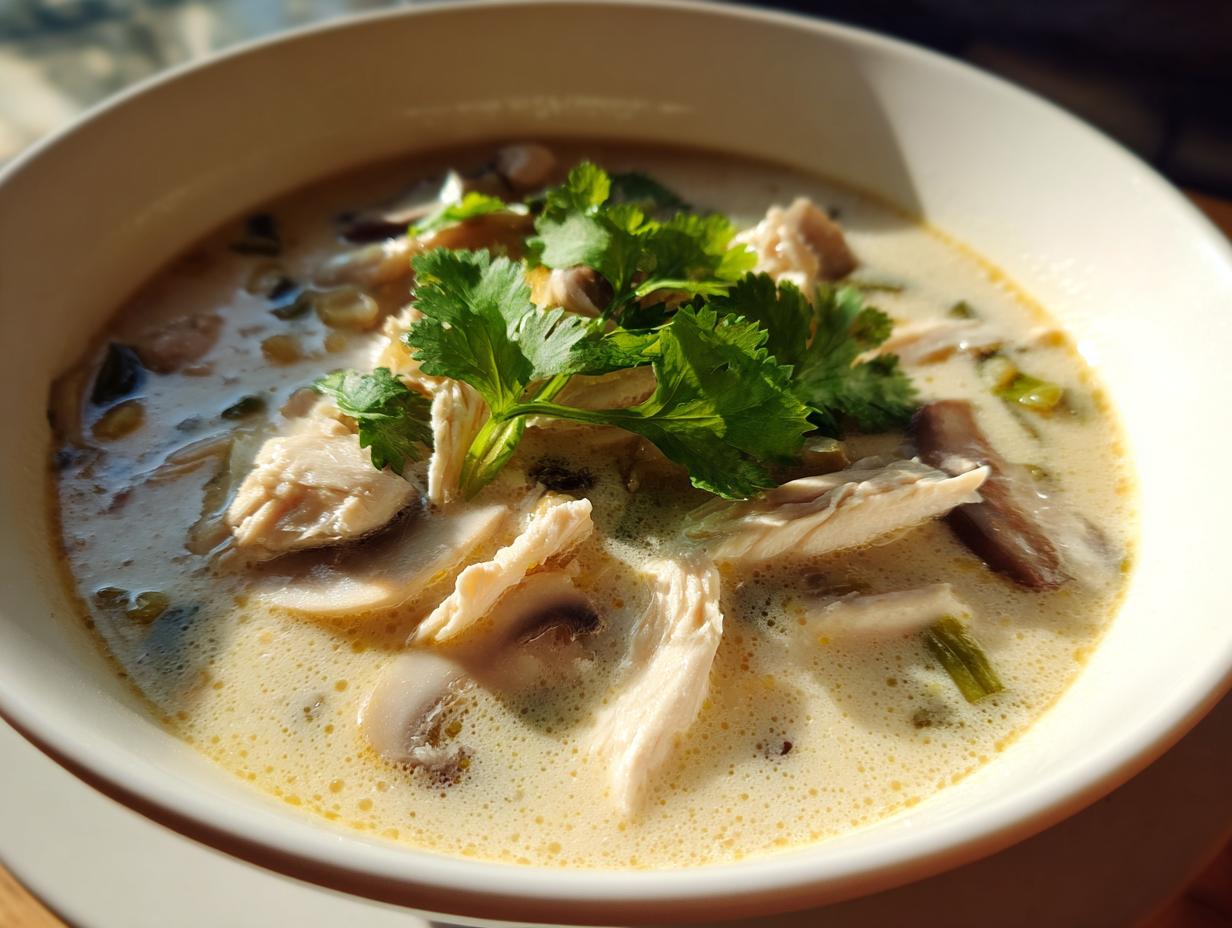
There is just something about Thai food that wraps around you like the warmest blanket on a blustery evening, isn’t there? When I crave that perfect balance of bright citrus, savory depth, and creamy richness, nothing hits the spot like a phenomenal bowl of coconut soup. For years, I thought truly authentic Tom Kha Gai was something reserved only for experienced chefs or takeout menus, but that’s just not true! Here at Cooking Zenith, Aria Thompson dug deep into mastering those huge, complex Thai restaurant flavors and broke them down so you can nail this spectacular Tom Kha Gai Recipe right in your everyday kitchen. Trust me, this is the richest, most aromatic Thai Coconut Soup you’ll ever make at home.
- Why This Tom Kha Gai is the Ultimate Coconut Soup Experience
- Essential Ingredients for Authentic Coconut Soup
- Step-by-Step Instructions to Make This Creamy Coconut Soup
- Tips for Perfecting Your Coconut Soup Every Time
- Adapting This Coconut Soup for Dietary Needs (Vegan and Keto)
- Storage and Reheating Instructions for Your Coconut Soup
- Serving Suggestions for Your Thai Coconut Soup
- Frequently Asked Questions About Coconut Soup
- Sharing Your Homemade Coconut Soup Success
- Tips for Perfecting Your Coconut Soup Every Time
- Adapting This Coconut Soup for Dietary Needs (Vegan and Keto)
- Storage and Reheating Instructions for Your Coconut Soup
- Serving Suggestions for Your Thai Coconut Soup
- Frequently Asked Questions About Coconut Soup
- Sharing Your Homemade Coconut Soup Success
Why This Tom Kha Gai is the Ultimate Coconut Soup Experience
I know there are a million “quick” soup recipes out there, but what makes this Tom Kha Gai recipe the one you need to bookmark? It shines because it actually delivers on the promise of incredible flavor without demanding your entire evening. We’re talking about bridging that gap between restaurant quality and weeknight ease. If you’ve ever felt like Thai cooking was too intimidating, this recipe is your gateway drug to feeling like a culinary rockstar!
Here’s what sets this specific comforting soup recipe apart:
- Authentic Depth, Simplified: We use traditional aromatics like lemongrass and ginger, allowing them to infuse slowly, which is key to an authentic Thai soup taste, but we keep the active time super short.
- That Perfect Texture: Forget heavy, broken-looking broths. This results in the most wonderfully light and creamy soup you can imagine—it just glides over your palate.
- Fast Weeknight Win: Seriously, from start to simmer to serving, you are looking at less than an hour total. This makes it perfect when you need genuine comfort food fast.
Essential Ingredients for Authentic Coconut Soup
Okay, stop right there! You can’t make show-stopping Thai Coconut Soup without the right players on your team. The magic here comes from layering intense, fresh aromatics into two main liquid elements: full-fat coconut milk and good quality broth. Seriously, don’t skimp on the coconut milk; that’s where all the creamy goodness lives!
For the chicken (I prefer thighs for extra richness, but breasts work too), make sure you slice them thinly so they cook fast while you’re simmering. Don’t forget your flavor bombs:
- 1 tablespoon coconut oil
- 1 pound boneless, skinless chicken breasts or thighs, thinly sliced
- 1 (13.5 ounce) can full-fat coconut milk
- 4 cups chicken broth
- 2 stalks lemongrass, trimmed and bruised
- 1 inch piece of fresh ginger, sliced thinly
- 2 cloves garlic, smashed
- 1 teaspoon ground turmeric (this gives it that gorgeous yellow hue!)
- 1/2 cup sliced mushrooms (cremini or white button are perfect)
- 2 tablespoons fish sauce
- 1 tablespoon brown sugar
- Juice of 1 lime
- 1/4 cup fresh cilantro, chopped, for garnish
- Optional: Sliced red chili for heat
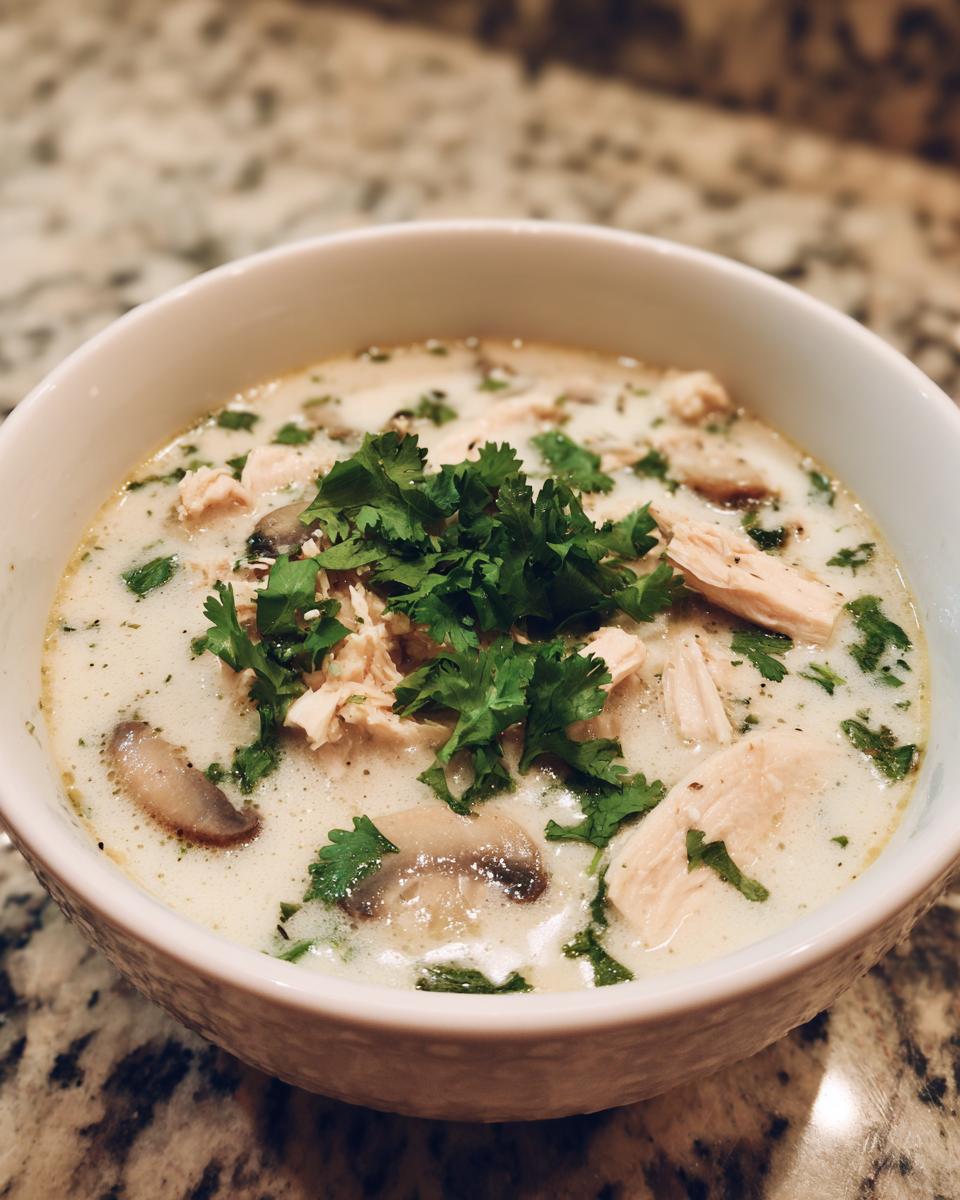
Now, if you’re opting for the Vegan Coconut Soup route—and you absolutely should try it sometime—swap out the chicken for:
- 1 block (14 oz) extra-firm tofu, pressed and cubed
Ingredient Notes and Substitutions for Your Coconut Soup
The single hardest thing to source is fresh lemongrass, but it’s worth the hunting! To “bruise” it, just give the stalk a few good smacks with the back of a heavy knife—this wakes up those amazing citrus oils. If you simply can’t find it, you can use 1 teaspoon of lemongrass paste, though you lose a tiny bit of that rustic charm. Remember, for those following a Keto Coconut Soup path, you’ll need to use your preferred keto sweetener instead of brown sugar, and always double-check that your fish sauce is compliant for Paleo Coconut Soup needs.
Step-by-Step Instructions to Make This Creamy Coconut Soup
This is where the magic happens! Making truly flavorful coconut soup doesn’t involve complicated stir-frying techniques; it’s all about layering your ingredients in the right order. I’ve broken this down into two simple phases so you can manage everything without feeling rushed. Just follow along, and you’ll have that incredible, bright, savory broth ready before you know it. If you’re looking for these amazing results on an even busier night, check out this easy coconut curry soup recipe for inspiration!
Searing the Protein and Building the Quick Coconut Broth Base
First things first, heat up that tablespoon of coconut oil in your biggest pot or Dutch oven over medium heat. Toss in your sliced chicken—or your cubed tofu if you’re going vegan—and let it cook for about four or five minutes until those pieces get just a little bit browned on the edges. This initial sear adds a layer of savory depth we don’t want to skip! Once that’s done, pour in your full can of coconut milk and your four cups of broth. Now, toss in all those amazing aromatics: the bruised lemongrass, the thinly sliced ginger, the smashed garlic, and that gorgeous turmeric powder. Give it a quick stir!
Infusing Flavor and Finishing Your Thai Coconut Soup
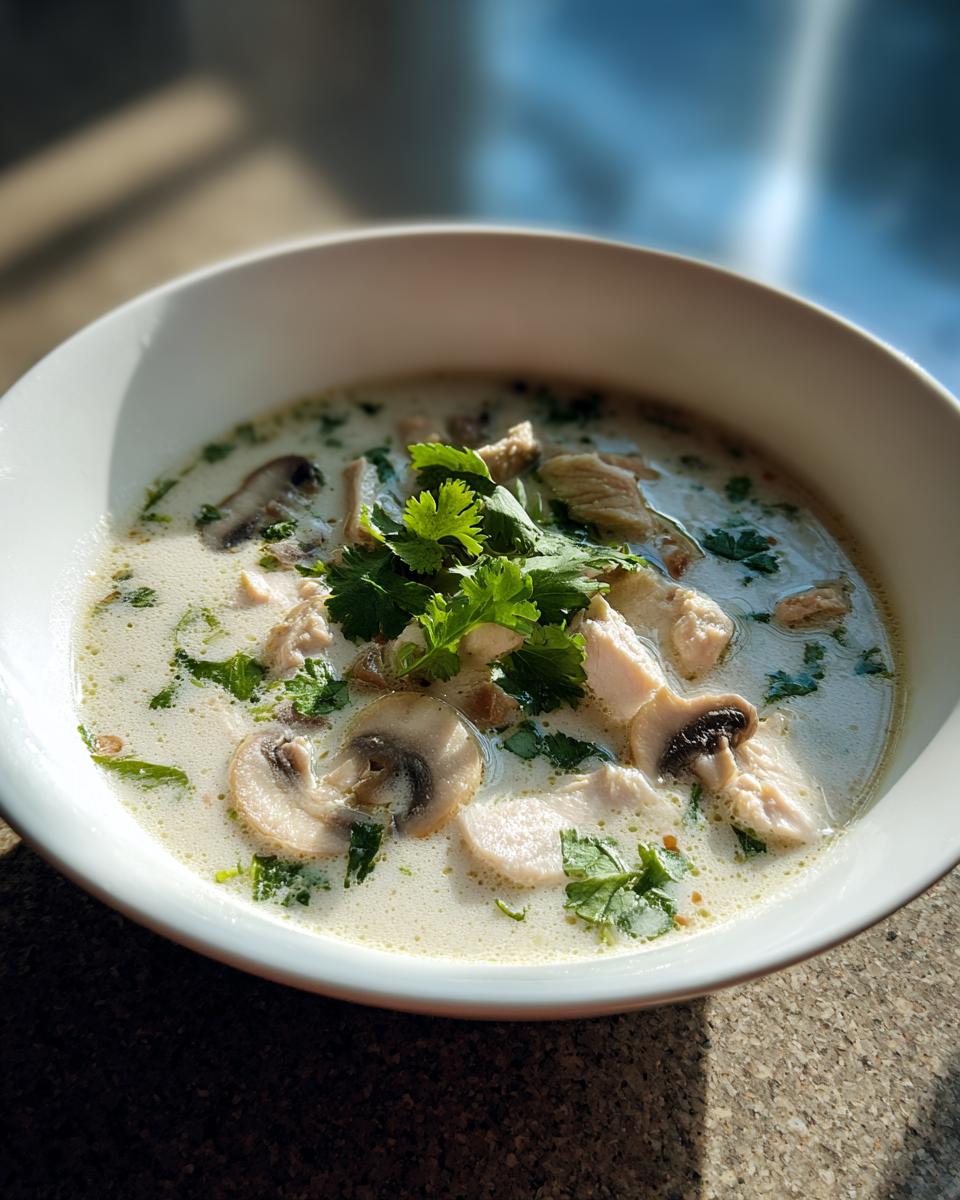
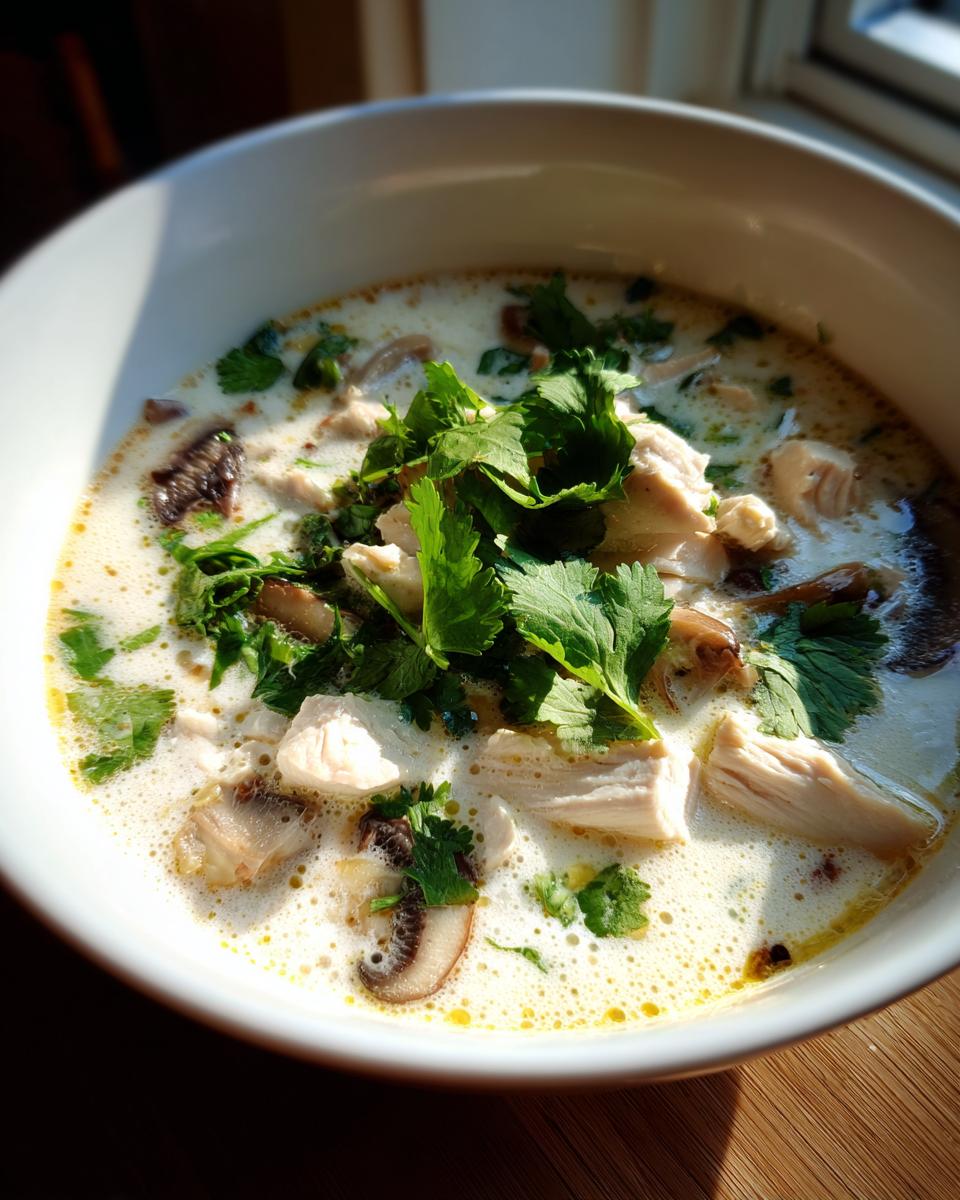
Now, we let the pot do the hard work! Bring that mixture up to a gentle simmer—and I mean gentle, no rolling boil here! Reduce your heat down low, cover it up, and let it hang out for 15 minutes. Trust me, this infusion time is non-negotiable for getting that authentic aroma. After 15 minutes, stir in your sliced mushrooms, the two tablespoons of fish sauce, and the brown sugar. You’ll simmer this phase for about five more minutes, or until your chicken is happy and cooked through. Before you serve, you MUST fish out those big pieces of lemongrass, ginger, and garlic—that’s crucial for the final texture. I usually just scoop them out with a slotted spoon, but you can strain the whole thing if you like it perfectly smooth. Right before you ladle it out—and this is key for keeping the broth bright—stir in the fresh lime juice. Taste it! Add more fish sauce if it needs salt, or a sprinkle more sugar if the lime is too sharp. Ladle it up, top it with cilantro, and you have an amazing Weeknight Soup Dinner ready to go!
Tips for Perfecting Your Coconut Soup Every Time
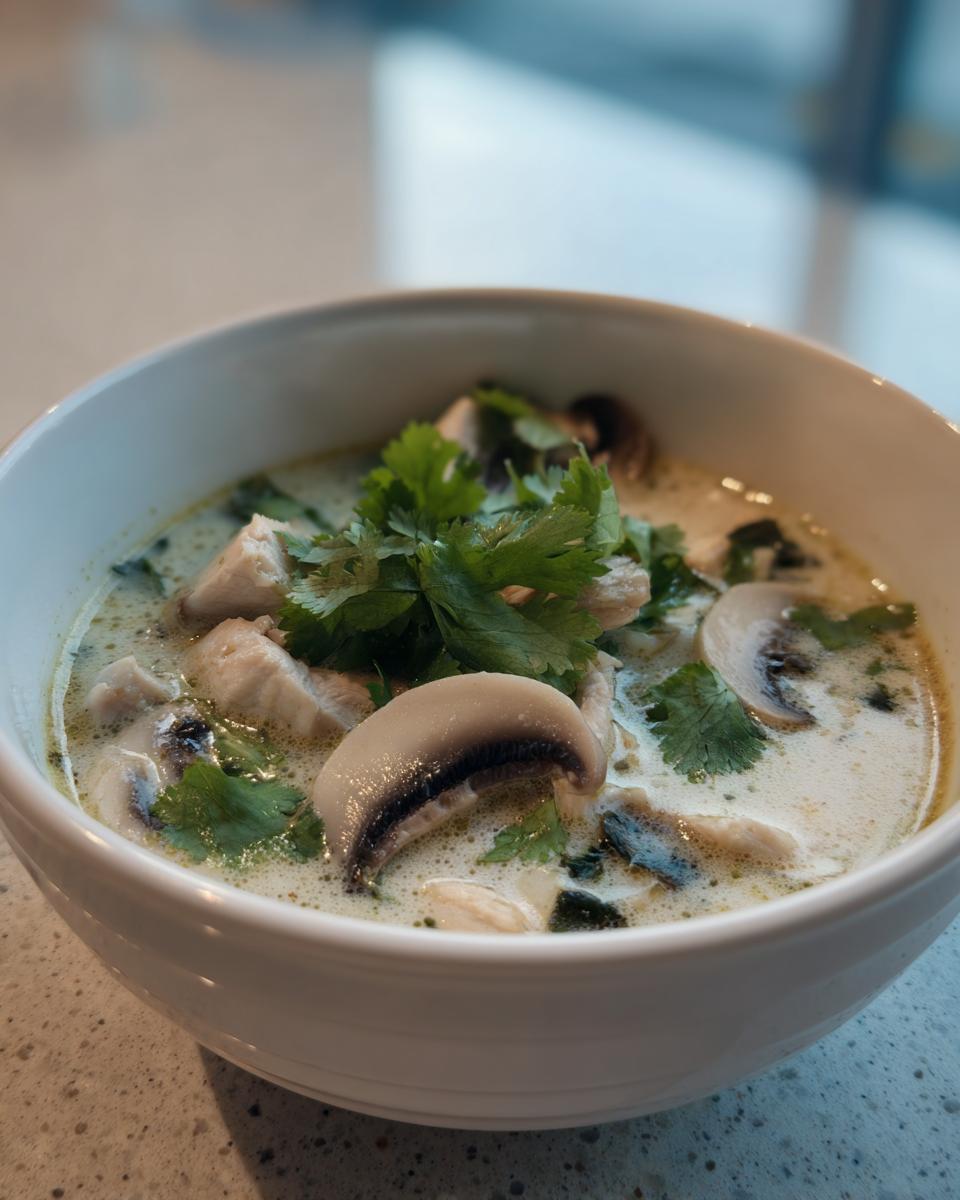
The secret to a truly Authentic Thai Soup isn’t complicated technique; it’s respecting the flavor balance. When you taste-test near the end, you are aiming for that perfect triangle: Salty (fish sauce), Sweet (sugar), and Sour (lime). Don’t be afraid to adjust! If you use chicken thighs, resist the urge to overcook them, or they can get stringy. And let’s talk lemongrass again: when you bruise it, really hit it firmly a few times with a rolling pin or the side of a heavy knife. You want to split the fibers slightly so those floral, citrusy oils release into the broth, not just sit there looking pretty!
Adapting This Coconut Soup for Dietary Needs (Vegan and Keto)
I love how easily this recipe bends to fit different needs without sacrificing that creamy texture we adore. If you’re whipping up a Vegan Coconut Soup, the pressing and cubing of the tofu, as noted in the ingredients, is super important so it can actually soak up the amazing flavors. For anyone making a Keto Coconut Soup, the biggest swap is the sugar—use erythritol or the sweetener of your choice to maintain that essential sweet note that balances the saltiness. You can see great examples of how other cooks adapt these specific diets, like in this delicious Vegan Thai Coconut Soup inspiration!
Storage and Reheating Instructions for Your Coconut Soup
The best part about this flavorful broth is that it tastes even better the next day, which is fantastic for busy schedules. After you’ve fished out the aromatics, let the soup cool down completely before you cover and refrigerate it. You can definitely freeze leftovers too—the notes say this broth freezes beautifully for up to three months! When you reheat it, though, stir gently. Coconut milk can sometimes separate if you boil it aggressively. Just use low heat and stir constantly until it’s warmed through, ensuring that lovely creamy coconut soup texture stays intact.
Serving Suggestions for Your Thai Coconut Soup
While this soup is hearty enough to be a meal on its own—especially packed with protein like this Chicken Coconut Soup version—it loves a classic accompaniment. I almost always have a small bowl of freshly steamed jasmine rice ready to serve alongside it. You just spoon a little of the broth and chicken over the rice; it’s heaven! If you want a fresh counterpoint, a simple side salad with a light dressing, perhaps something bright like my quick and healthy salad dressing recipes, provides the perfect palate cleanser between sips of that amazing broth. It’s light, yet incredibly satisfying.
Frequently Asked Questions About Coconut Soup
Can I use red curry paste instead of fresh ginger and turmeric?
You totally can! If you’re in a pinch, adding a tablespoon or two of good quality red curry paste will give you a fantastic flavor boost, leaning it closer to a Thai Coconut Curry Soup style. Just know that you might lose some of those specific bright, earthy notes that the fresh ginger and turmeric provide in this classic Tom Kha style. For the best Ginger Turmeric Soup flavor though, stick to the fresh spices!
What if I can’t find fish sauce for my soup?
Fish sauce is truly the soul of savory flavor in Thai cooking, but if you absolutely must substitute it, try using soy sauce or tamari for a gluten-free option. However, you’ll need to be more careful with the sugar measurement, as soy sauce (or tamari) brings its own saltiness. For an ultra-savory boost, I sometimes add just a splash of white miso paste alongside the soy sauce, but remember this changes the flavor profile away from the traditional taste.
Is this recipe inherently spicy, or can I control the heat easily?
The base recipe, as written, is not spicy at all! The heat comes entirely from the optional sliced red chili we garnish it with. You control 100% of the fire! If you like things hot, mince up a few slices of that red chili and stir them in during the last five minutes of simmering so the heat can fully infuse the broth.
Can I use less fat in the coconut milk?
I strongly advise against using “lite” coconut milk if you are seeking that rich, velvety texture that makes this soup famous. Lite versions are much thinner and frankly, they break or curdle easily when heated. Sticking to the full-fat variety is the only way to ensure your wonderful coconut soup stays creamy and unthinned.
Sharing Your Homemade Coconut Soup Success
Now that you have all the secrets to crafting the most authentic, creamy, and comforting Tom Kha Gai right in your own kitchen, I desperately want to know how it went! Seriously, come back and drop me a star rating below—it helps other home cooks gain confidence in trying this dish. Did you use chicken or tofu? Did you sneak in extra ginger? Tell me all about your experience making this incredible coconut soup in the comments! Don’t forget to check out my story to see where all these kitchen adventures begin!
Tips for Perfecting Your Coconut Soup Every Time
The secret to a truly Authentic Thai Soup isn’t complicated technique; it’s respecting the flavor balance. When you taste-test near the end, you are aiming for that perfect triangle: Salty (fish sauce), Sweet (sugar), and Sour (lime). Don’t be afraid to adjust! If you use chicken thighs, resist the urge to overcook them, or they can get stringy. And let’s talk lemongrass again: when you bruise it, really hit it firmly a few times with a rolling pin or the side of a heavy knife. You want to split the fibers slightly so those floral, citrusy oils release into the broth, not just sit there looking pretty! For other flavor profiles that need balancing, sometimes a little homemade sauce works wonders, like this recipe for easy homemade teriyaki sauce, although we stick to the traditional Thai trio here!
Adapting This Coconut Soup for Dietary Needs (Vegan and Keto)
I love how easily this recipe bends to fit different needs without sacrificing that creamy texture we adore. If you’re whipping up a Vegan Coconut Soup, the pressing and cubing of the tofu, as noted in the ingredients, is super important so it can actually soak up the amazing flavors. For anyone making a Keto Coconut Soup, the biggest swap is the sugar—use erythritol or the sweetener of your choice to maintain that essential sweet note that balances the saltiness. Remember, just like when making a Keto pizza crust, every ingredient counts for compliance!
You can see great examples of how other cooks adapt these specific diets, like in this delicious Vegan Thai Coconut Soup inspiration. Always double-check your fish sauce packaging for hidden sugars if you’re holding strictly to Paleo or Keto, but honestly, the tofu swap is the easiest part!
Storage and Reheating Instructions for Your Coconut Soup
The best part about this flavorful broth is that it tastes even better the next day, which is fantastic for busy schedules. After you’ve fished out the aromatics, you absolutely need to let the soup cool down completely before you cover and refrigerate it. If you trap that heat in the fridge, it can actually cause the coconut milk to start breaking down awkwardly.
You can definitely freeze leftovers too! I was thrilled when I tested this; the notes say this broth freezes beautifully for up to three months. Just pour it into freezer-safe bags or containers, leaving a little headspace for expansion. If you’re reheating a batch after it’s been chilled or thawed, please, please, please stir gently!
Coconut milk can sometimes separate or get a little grainy if you boil it aggressively. Just use low heat on the stovetop and stir constantly until it’s warmed through. It acts just like a delicate sauce when hot, so treat it gently. This care ensures that lovely creamy coconut soup texture stays perfect every single time you reheat it.
Serving Suggestions for Your Thai Coconut Soup
While this soup is hearty enough to be a meal on its own—especially packed with protein like this Chicken Coconut Soup version—it loves a classic accompaniment. I almost always have a small bowl of freshly steamed jasmine rice ready to serve alongside it. You just spoon a little of the broth and chicken over the rice; it’s heaven! If you want a fresh counterpoint, a simple side salad with a light dressing, perhaps something bright like my quick and healthy salad dressing recipes, provides the perfect palate cleanser between sips of that amazing broth. It’s light, yet incredibly satisfying.
Frequently Asked Questions About Coconut Soup
Can I use red curry paste instead of fresh ginger and turmeric?
You totally can! If you’re in a pinch, adding a tablespoon or two of good quality red curry paste will give you a fantastic flavor boost, leaning it closer to a Thai Coconut Curry Soup style. Just know that you might lose some of those specific bright, earthy notes that the fresh ginger and turmeric provide in this classic Tom Kha style. For the best Ginger Turmeric Soup flavor though, stick to the fresh spices!
What if I can’t find fish sauce for my soup?
Fish sauce is truly the soul of savory flavor in Thai cooking, but if you absolutely must substitute it, try using soy sauce or tamari for a gluten-free option. However, you’ll need to be more careful with the sugar measurement, as soy sauce (or tamari) brings its own saltiness. For an ultra-savory boost, I sometimes add just a splash of white miso paste alongside the soy sauce, but remember this changes the flavor profile away from the traditional taste.
Is this recipe inherently spicy, or can I control the heat easily?
The base recipe, as written, is not spicy at all! The heat comes entirely from the optional sliced red chili we garnish it with. You control 100% of the fire! If you like things hot, mince up a few slices of that red chili and stir them in during the last five minutes of simmering so the heat can fully infuse the broth. This keeps it flexible for everyone at the table!
Can I use less fat in the coconut milk?
I strongly advise against using “lite” coconut milk if you are seeking that rich, velvety texture that makes this soup famous. Lite versions are much thinner and frankly, they break or curdle easily when heated. Sticking to the full-fat variety is the only way to ensure your wonderful coconut soup stays truly creamy and unthinned, especially if you are making this classic Chicken Coconut Soup base.
Sharing Your Homemade Coconut Soup Success
Now that you have all the secrets to crafting the most authentic, creamy, and comforting Tom Kha Gai right in your own kitchen, I desperately want to know how it went! Seriously, come back and drop me a star rating below—it helps other home cooks gain confidence in trying this dish.
Did you use chicken or tofu? Did you sneak in extra ginger? Tell me all about your experience making this incredible coconut soup in the comments! I read every single one, and I love seeing your photos when you share them online. Don’t forget to check out my story to see where all these kitchen adventures begin if you want to know more about my process!
PrintAuthentic Tom Kha Gai: Thai Coconut Chicken Soup
Make this authentic Thai Coconut Chicken Soup, Tom Kha Gai, at home. This recipe delivers a creamy, bright, and deeply flavorful broth perfect for a comforting weeknight dinner.
- Prep Time: 15 min
- Cook Time: 30 min
- Total Time: 45 min
- Yield: 4 servings 1x
- Category: Dinner
- Method: Stovetop
- Cuisine: Thai
- Diet: Low Fat
Ingredients
- 1 tablespoon coconut oil
- 1 pound boneless, skinless chicken breasts or thighs, thinly sliced
- 1 (13.5 ounce) can full-fat coconut milk
- 4 cups chicken broth
- 2 stalks lemongrass, trimmed and bruised
- 1 inch piece of fresh ginger, sliced thinly
- 2 cloves garlic, smashed
- 1 teaspoon ground turmeric
- 1/2 cup sliced mushrooms (cremini or white button)
- 2 tablespoons fish sauce
- 1 tablespoon brown sugar
- Juice of 1 lime
- 1/4 cup fresh cilantro, chopped, for garnish
- Optional: Sliced red chili for heat
- For Vegan Option: Substitute chicken with 1 block (14 oz) extra-firm tofu, pressed and cubed
Instructions
- Heat the coconut oil in a large pot or Dutch oven over medium heat. Add the sliced chicken (or tofu cubes for the vegan option) and cook until lightly browned, about 4 to 5 minutes.
- Pour in the coconut milk and chicken broth. Add the bruised lemongrass stalks, sliced ginger, smashed garlic, and ground turmeric.
- Bring the mixture to a gentle simmer. Reduce the heat to low, cover, and let it simmer for 15 minutes to allow the aromatics to infuse the broth.
- Stir in the sliced mushrooms, fish sauce, and brown sugar. Continue to simmer for another 5 minutes, or until the chicken is fully cooked through.
- Remove the lemongrass stalks, ginger slices, and garlic cloves from the pot. You can leave them out or strain the soup for a smoother texture.
- Stir in the fresh lime juice just before serving. Taste and adjust seasoning, adding more fish sauce for saltiness or sugar for balance if needed.
- Ladle the soup into bowls. Garnish generously with fresh cilantro and sliced red chili, if using.
Notes
- For a Paleo Coconut Soup or Keto Coconut Soup adaptation, ensure your fish sauce and sugar are compliant, or substitute the sugar with a keto-friendly sweetener.
- If you do not have fresh lemongrass, you can use 1 teaspoon of lemongrass paste, but the flavor will be less authentic.
- This soup freezes well. Cool completely before storing in an airtight container for up to 3 months.
Nutrition
- Serving Size: 1.5 cups
- Calories: 320
- Sugar: 5
- Sodium: 650
- Fat: 22
- Saturated Fat: 18
- Unsaturated Fat: 4
- Trans Fat: 0
- Carbohydrates: 8
- Fiber: 1
- Protein: 24
- Cholesterol: 75