

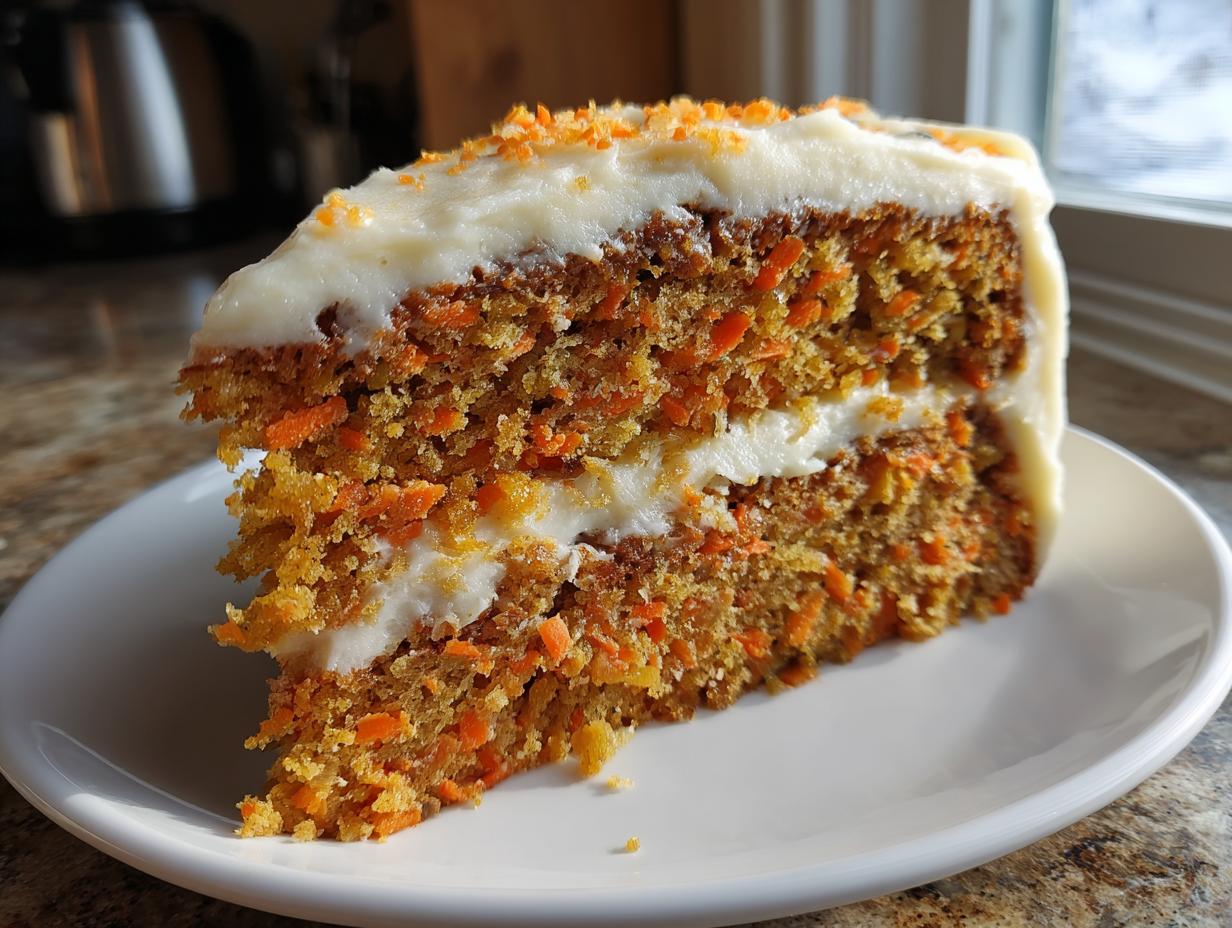
Oh, let’s be honest, sometimes you just need a slice of cake that tastes like pure, unadulterated comfort, right? Not some light, airy sponge, but a truly substantial, richly spiced slice. If that sounds like you, then welcome home! I’m Aria, and I’m thrilled to share the recipe that haunts my dreams: the ultimate ultra-moist homemade carrot cake recipe, complete with that non-negotiable, tangy cream cheese frosting.
This isn’t just another recipe I tossed together last week; this is *the* one. It’s the one that my friends used to beg me to bake for every single occasion, and it’s the primary reason people always asked me to start Cooking Zenith. Why? Because it consistently delivers an intensely flavorful, deeply moist cake that smells like autumn year-round—and you don’t need to be a professional baker to nail it. If you’ve struggled with dry carrot cake in the past, toss those worries out the window. We are making the best homemade carrot cake you’ve ever tasted, and we’re starting right now.
- Why This is the Ultimate Moist Carrot Cake Recipe
- Gathering Ingredients for Your Homemade Carrot Cake Recipe
- Step-by-Step Instructions for the Best Carrot Cake Recipe
- Expert Tips for an Easy Carrot Cake Recipe Success
- Variations on the Classic Carrot Cake Recipe
- Serving Suggestions for Your Delicious Carrot Cake Recipe
- Storage and Reheating Instructions for Carrot Cake Recipe Leftovers
- Frequently Asked Questions About This Carrot Cake Recipe
- Nutritional Estimates for the Carrot Cake Recipe
Why This is the Ultimate Moist Carrot Cake Recipe
Look, there are carrot cakes, and then there is this carrot cake. The difference between a good cake and the best homemade carrot cake is the texture, and honestly, I think we cracked the code here. This particular moist carrot cake recipe is famous at gatherings because it stays perfectly tender for days, even after it’s been fully frosted. It’s sturdy enough to stack high but melts in your mouth the second you bite into it.
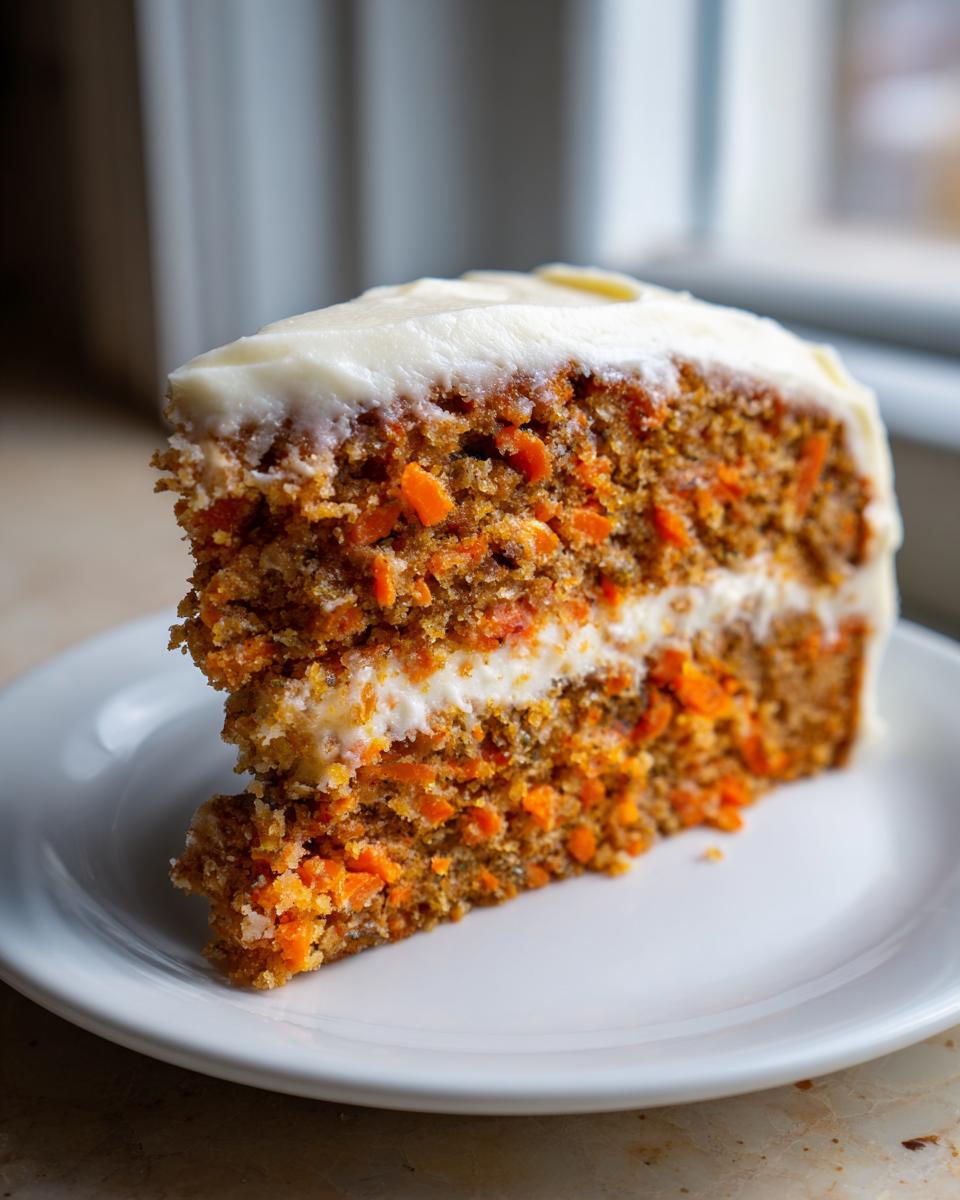
Now, here’s one of my golden rules, an E-E-A-T tip straight from my own testing sessions: we use oil, not butter. I know, I know! But butter adds flavor, yes, but oil keeps the crumb incredibly soft and prevents that dry, cakey texture from setting in. Trust me on this one; the oil is key to maximizing that moist feeling!
Texture Secrets for a Truly Moist Carrot Cake Recipe
The structural magic starts before you even turn on the mixer. You absolutely must finely grate those carrots—I mean *finely*. They need to disappear into the batter, lending their moisture without adding distracting chunks. Also, read those ingredients! Because we use oil, we skip some of the heavy creaminess you get from butter, which means the flour, leavening agents, and carrots work together perfectly to trap the required moisture inside. It’s science, but tasty science!
The Perfect Balance of Spices in Our Classic Carrot Cake Recipe
For me, a carrot cake isn’t truly a carrot cake unless you can smell the warm hug coming from the oven. That’s where the spices come in. We don’t just rely on cinnamon here; we layer cinnamon with nutmeg and a touch of allspice. This combination creates a deep, complex flavor profile that lets the sweet carrots shine through without tasting like dessert seasoning went rogue. It’s the ultimate spiced carrot cake experience, perfectly balanced.
Gathering Ingredients for Your Homemade Carrot Cake Recipe
Okay, taking the time to properly gather your ingredients—what we call Mise en Place around here—is essential for any carrot cake recipe, especially when you want that amazing moisture. Don’t let yourself run around looking for things once the dry mix is wet! We need precision here to make sure those layers bake up beautifully and evenly. This transparency about what goes into the batter and the frosting is what makes this recipe reliable, a cornerstone of any truly great carrot cake from scratch.
Cake Batter Ingredients for the Carrot Cake Recipe
This list is what gives us that signature texture and sweetness. Pay close attention to the brown sugar measurement; it’s packed down, which makes a real difference!
- 2 cups all-purpose flour
- 2 teaspoons baking soda
- 1 teaspoon ground cinnamon
- 1/2 teaspoon ground nutmeg
- 1/2 teaspoon ground allspice
- 1/2 teaspoon salt
- 1 1/2 cups granulated sugar
- 1 cup packed light brown sugar
- 1 cup vegetable oil
- 4 large eggs
- 2 teaspoons vanilla extract
- 3 cups finely grated carrots (about 4-5 medium carrots)
- 1 cup chopped walnuts or pecans (optional)
- 1 cup raisins (optional)
Cream Cheese Frosting Ingredients (Topping the Carrot Cake Recipe)
Now for the star of the show—the frosting! You can’t have the best homemade carrot cake without a luxurious, tangy topping. I cannot stress this enough: for the creamiest frosting, your cream cheese and butter absolutely must be at true room temperature before you start. If they are cold, you’ll end up with lumps, and nobody wants lumpy frosting!
- 8 ounces (one block) full-fat cream cheese, softened to room temperature
- 1/2 cup (1 stick) unsalted butter, softened to room temperature
- 4 cups powdered sugar, sifted if lumpy
- 1 teaspoon vanilla extract
- 1-2 tablespoons heavy cream or milk (only if needed for thinning)
Step-by-Step Instructions for the Best Carrot Cake Recipe
Writing down the instructions for the best carrot cake recipe is almost the hardest part, because honestly, the folding is the most intuitive step! But we need structure, right? Follow these steps exactly, and you are guaranteed that ultra-moist texture we talked about. I’ve been making this for so many years that even when I’m half-asleep, I nail the timing. Remember, we’re aiming for that perfect, tender crumb that makes this the ultimate homemade treat.
Preparing the Pans and Dry Mix for the Carrot Cake Recipe
First things first, get that oven preheating to 350°F (175°C). This is crucial! While it warms up, grab your two 9-inch round cake pans. Make sure you grease them really well and then dust them lightly with flour, or just pop down some parchment circles on the bottoms—total lifesaver. Now, in a standard large bowl, whisk together the flour, baking soda, and all those glorious spices: cinnamon, nutmeg, and allspice, plus the salt. Whisking them together now prevents dry pockets later, so don’t skip that step!
Mixing Wet Ingredients and Combining the Carrot Cake Batter
In a separate, bigger bowl, it’s time for the sweet stuff. Whisk together both the granulated and light brown sugars with that cup of vegetable oil, then mix in the four eggs one at a time, followed by the vanilla. Once that looks smooth, start adding your pre-mixed dry ingredients. Mix it slowly, just until you see it all come together. Stop! Seriously, stop the mixer right there. Overmixing develops gluten, and gluten means tough cake, not the moist cake we want. Now, grab a spatula, and gently fold in those three cups of finely grated carrots and those optional nuts and raisins. Fold until they are just distributed evenly through the batter.
Baking and Cooling the Carrot Cake Recipe Layers
Divide that beautiful, speckled batter evenly between your two prepared pans. Pop them into that preheated oven and set a timer for 30 minutes. Around the 30-minute mark, start checking! You want that wooden pick inserted into the center to come out clean, or maybe with just a *couple* of moist, happy crumbs clinging to it. As soon as they pass the test, pull them out and let them cool in those pans for about 10 minutes. Then invert them onto a wire rack to cool completely. I know it’s torture waiting, but you absolutely have to wait until they are totally cool before slathering on the cream cheese frosting. If you frost warm layers, you’ll end up with a delicious, soupy mess! If you ever want a comparison for how to manage fluffy frosting textures, check out my tips on vanilla buttercream frosting—the principles of temperature control are the same!
Expert Tips for an Easy Carrot Cake Recipe Success
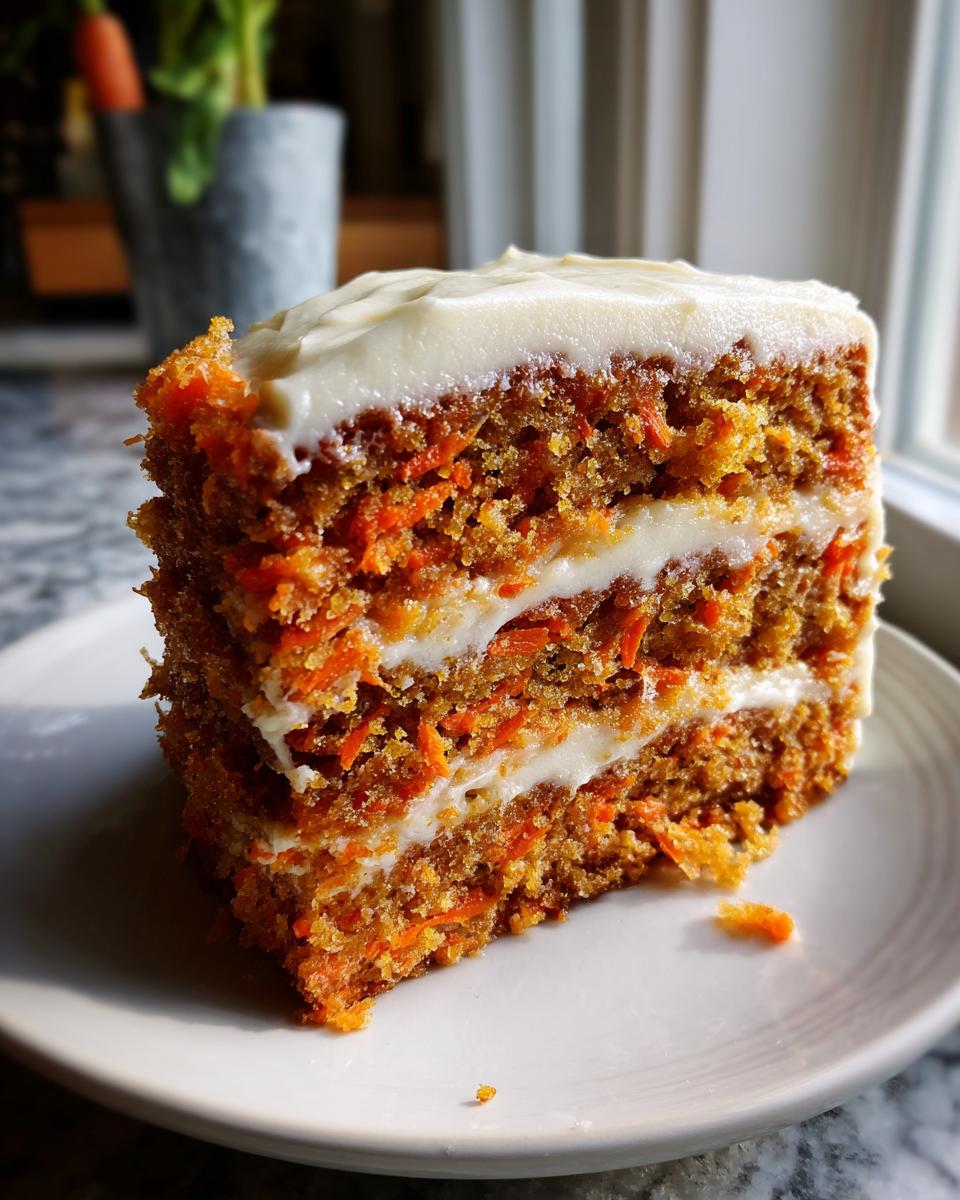
I want you all to feel totally confident tackling this carrot cake recipe. Moving beyond just reading the steps, the real secret to an easy carrot cake recipe success—and achieving that ultra-moist texture—comes down to a few insider tricks. When you’re trying to figure out exactly how to make moist carrot cake, these details are what separate standard from spectacular!
Ingredient Notes and Substitutions for Your Carrot Cake Recipe
Let’s talk about those components that make or break the final product. First, circling back to the frosting: if you’re making the cream cheese topping, remember that cold cream cheese and butter equal lumpy frosting. Set them out way before you plan to mix them—I mean, let them sit for a good hour until they are perfectly soft. Also, please don’t try to swap out the oil for something else unless you’re mentally prepared for a slightly different texture. Oil is vital for that melt-in-your-mouth quality.
Now, if you absolutely need to reduce the fat slightly, you can swap about half of the oil for unsweetened applesauce. Keep in mind, though, that applesauce is water-based, so your cake might not stay fresh quite as long or feel quite as rich. For the mix-ins, if you skip the nuts and raisins, my notes suggest tossing in 1/2 cup of drained, crushed pineapple. That extra fruit juice is fantastic insurance against dryness!
Making This Carrot Cake Recipe Great for Easter
Since this recipe definitely has that holiday vibe, let’s talk presentation! If you’re making this for Easter or any spring gathering, you can make it look stunning without spending hours piping fiddly flowers. After you frost it generously, try sprinkling toasted, sweetened coconut flakes lightly over the top edges—it looks just like soft green grass in the spring! Another simple trick is to pipe little miniature carrot shapes using reserved frosting tinted orange and green. You can find some fun, subtle decoration inspiration from others who bake for these events, like these Perfect Easter Carrot Cake ideas.
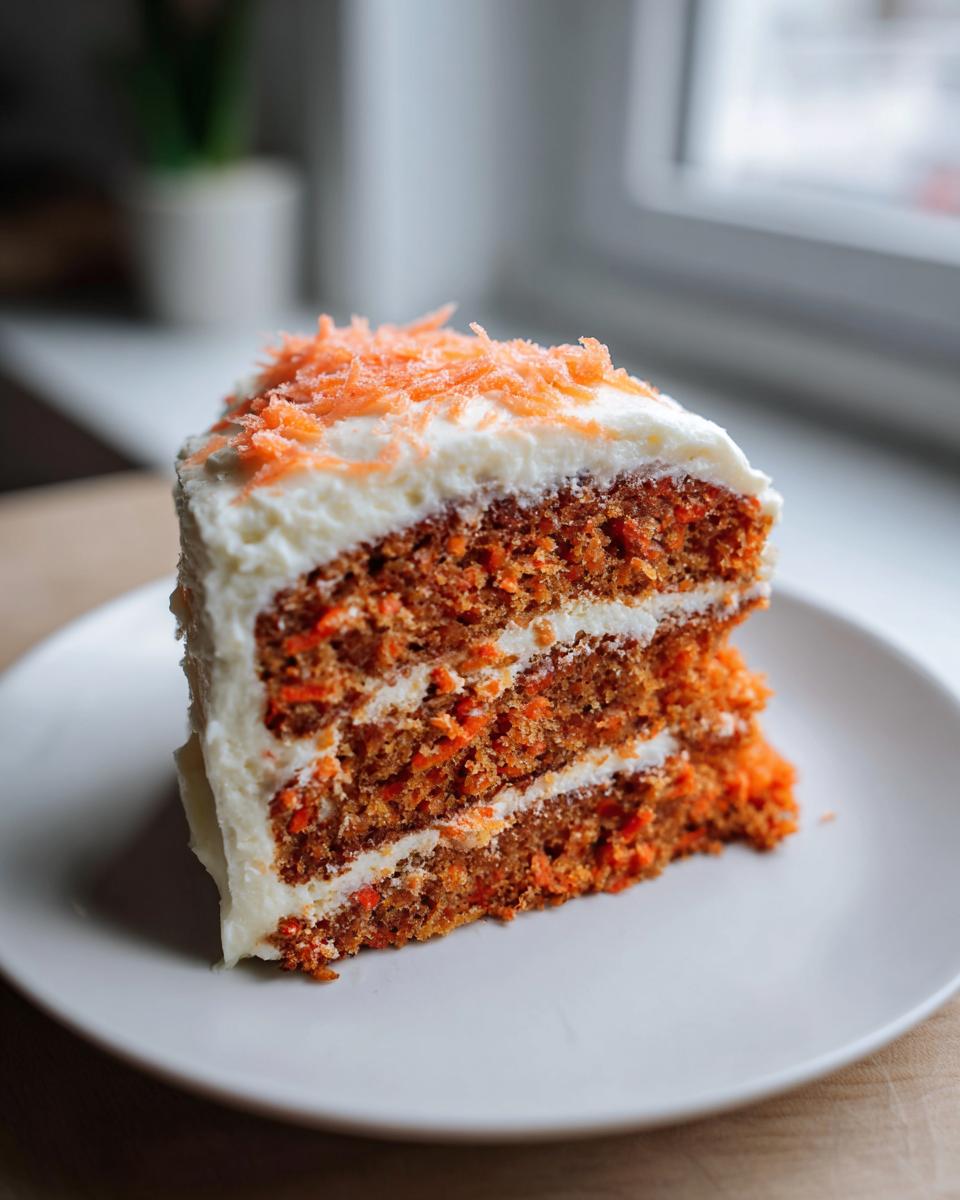
Alternatively, if you keep it incredibly simple, just dust the top with a light coating of powdered sugar before you serve it. Elegance doesn’t have to mean complicated decoration, especially when the interior of the cake is already this delicious!
Variations on the Classic Carrot Cake Recipe
I know sometimes you don’t want the fuss of stacking two layers, or maybe you just need a bigger yield for a crowd. That’s perfectly fine! This batter is so versatile, which only adds to why I love this recipe so much. We can use it for everything from individual muffins to one giant, show-stopping cake. Don’t sweat the format; the flavor stays fantastic no matter what pan you choose.
Converting the Carrot Cake Recipe to a Sheet Cake
If you’re planning for a big family picnic or just want something super easy to serve, swapping to a sheet cake is your best bet. Just take all the batter and pour it into a greased and floured 9×13 inch pan. The oil in the batter ensures it stays moist, even in that relatively thin format. Since the batter will be shallower, the baking time drops slightly, but keep a close eye on it. I’d start checking around 25 minutes, but honestly, it might take closer to 30-35 minutes total. You’ll get that incredible flavor of a great carrot sheet cake recipe without any tricky layer leveling!
Making a Carrot Bundt Cake Recipe
Oh, the Bundt pan! It makes even the simplest cake look elegant, doesn’t it? If you decide to go the Bundt route, you need to show that pan some extra love since these cakes are famous for sticking. Grease it really well with shortening or baking spray, and make sure you actually dust it with flour afterwards so the batter has something to grab onto when it rises. Because the Bundt pan is so deep, the center takes longer to cook through. You’ll need to increase your baking time significantly—I’d start checking around 45 minutes, but don’t be surprised if it takes a full hour depending on your pan material. It’s all worth it for that stunning final look, though!
If you’re looking to transform this into grab-and-go treats, check out my specific carrot cake muffins recipe; it uses this exact flavor base but bakes up in just minutes!
Serving Suggestions for Your Delicious Carrot Cake Recipe
So the cake is baked, cooled, frosted, and smelling absolutely heavenly. Now comes the best part: figuring out what to serve alongside it! While I maintain that this carrot cake recipe is perfect all on its own, sometimes pairing it with a great beverage or a little something extra elevates the whole experience, especially if you’re serving it up for a holiday or special dinner.
For a festive gathering, you really can’t beat something warm and spiced to complement those cinnamon notes in the cake. If it’s a fall or winter party, you’ve got to try making a great pumpkin spice latte! My own recipe for pumpkin spice latte is simple enough to whip up while the cake is setting, and the creamy nutmeg flavor dances perfectly with the carrots and cream cheese.
If you’re serving this in the spring or summer, lean into something lighter. A cold glass of milk is criminally underrated with cake, and honestly, sometimes the simplest pairing is the best. You could also try serving a very small slice alongside a scoop of high-quality vanilla bean ice cream. The ice cream provides that perfect temperature contrast to the room-temperature cake. Just a small scoop is all you need!
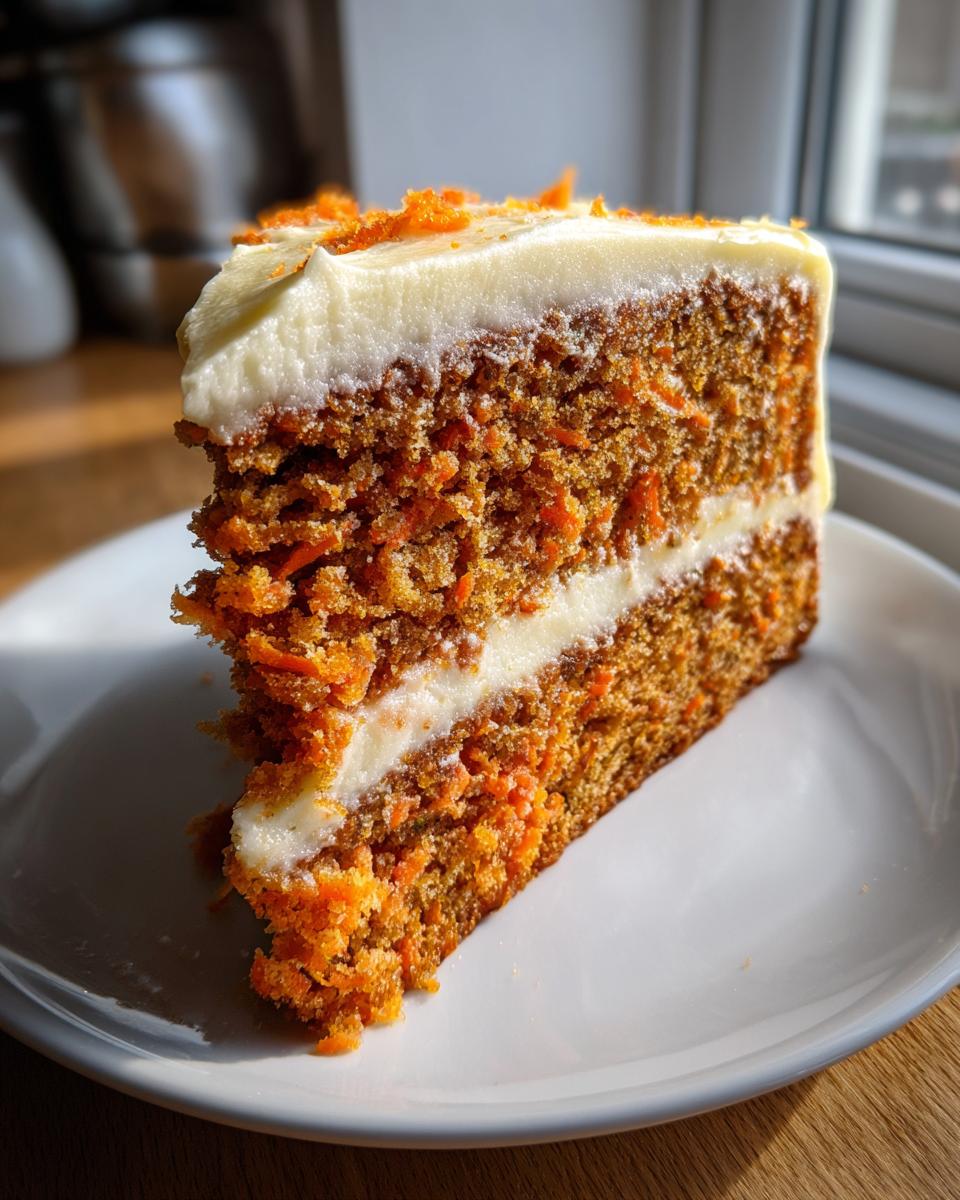
Remember, the goal is to complement the richness of the cake and frosting, not overpower it. This cake is already packed with flavor, so keep the accompaniments clean and classic!
Storage and Reheating Instructions for Carrot Cake Recipe Leftovers
Don’t you hate it when you make an incredible cake and then you’re not sure how to keep it perfect? I totally get it. Since this carrot cake recipe is so rich with oil and that tangy cream cheese frosting, storage is super important to keep that ultra-moist texture locked in. We don’t want any dry edges threatening those beautiful layers!
The general rule of thumb for most cakes is to leave them out on the counter, but because we have that beautiful cream cheese frosting made with real dairy up there, we have to be a little more careful. Room temperature stability for this frosting is only really reliable for about two hours max, especially if your kitchen runs warm. So, refrigeration is your friend here.
To store the frosted cake, you need an airtight container, or at least cake keepers that seal well. If you don’t have those, you can carefully cover the whole thing loosely with plastic wrap, making sure the wrap doesn’t actually touch the frosting surface. If it touches, it pulls off big chunks when you try to unwrap it—ask me how I know, oops!
I find this cake honestly tastes even better on day two because the spices have time to really settle and bloom throughout the crumb. It should stay perfectly good, super moist and delicious, in the fridge for about 4 to 5 days tucked away safely.
Now, let’s talk about freezing! This cake freezes like a dream, which is great if you bake it for a holiday and want to get ahead of the game. You have two options here, and both work well. If you freeze it *unfrosted*, wrap each cooled layer tightly in two layers of plastic wrap, and then tuck that whole package into a large zip-top freezer bag. It’ll keep well for up to three months.
If you want to freeze it frosted (which I often do, because who has time to frost an Easter cake the day before the guests arrive?), make sure it’s fully chilled first. Then, place it directly in the freezer, uncovered, for about an hour until the frosting is rock hard. That hard shell protects it! Then, you can wrap it just like the unfrosted layers. When you’re ready to eat it, just transfer the frozen cake to the fridge for a good 12-24 hours to thaw slowly. It comes out tasting like you just baked it!
Frequently Asked Questions About This Carrot Cake Recipe
Whenever I share this recipe, people always have fantastic questions about tweaking it for their needs. That’s the beauty of cooking from scratch—you get to customize! Here are some of the most common things I hear about making this ultra-moist cake.
Can I make this carrot cake recipe without nuts or pineapple?
Absolutely, you can skip those mix-ins! Our ingredient list marks the walnuts/pecans and raisins as optional, so feel free to leave them out if you or a guest has an allergy or just isn’t a fan. However, remember that the recipe relies on those extras to bulk up the cake and contribute to that amazing moisture. If you skip *both* the nuts and the raisins, you need moisture insurance!
In that case, I strongly recommend you toss in that 1/2 cup of crushed pineapple, well drained, just like I mentioned in the notes. If even pineapple is a no-go, you could try lightly crushing up some extra carrots to make up the volume, but honestly, the pineapple really boosts the texture when you omit the others. It’s simple to adjust!
What is the secret to the ‘best homemade carrot cake’ texture?
If I had to boil down all my testing into one sentence about achieving that best homemade carrot cake texture, it would be: Oil over butter, and gentle mixing over aggressive mixing. The oil is what keeps the crumb incredibly soft and never dry, even storing it in the fridge. But even with the right fat, you must treat that flour gently!
When you add the dry ingredients to the wet, mix only until you no longer see streaks of white flour. That’s it! If you mix it vigorously until everything is perfectly homogenous, you’re developing gluten, and that gluten turns that fluffy potential into something rubbery and dense. We want tender! Also, make sure those carrots are finely grated—coarse shreds just don’t blend into that delicate system properly.
How far in advance can I bake the layers for this carrot cake recipe?
This is such a great question, especially if you’re planning for a big event like Easter or a holiday party! Baking ahead saves so much stress. You can bake the layers completely up to two days in advance. Once they are totally cool, wrap each layer individually in plastic wrap, then follow that up with a layer of aluminum foil or just tuck them into a large freezer bag. Keep them on the counter if your kitchen isn’t overly warm, or a cool spot in the pantry.
If you’re going further out, the freezer is your best friend—they freeze perfectly for a month or more, as we discussed! When you’re ready to frost, just take them out, let them sit on the counter for just an hour or two to take the chill off, and then you are ready for the cream cheese frosting application. It saves the day, and honestly, sometimes I think the flavors settle in nicely overnight, even when baked ahead. Don’t forget, sometimes simple homemade projects, like making your own mayo (if you ever need a side condiment!), benefit from that resting time too!
Nutritional Estimates for the Carrot Cake Recipe
Now, I know most of us aren’t baking for nutrition facts—we’re baking for joy! But because I want this to be the most complete carrot cake recipe guide out there, I always provide an estimated nutritional breakdown. Please keep in mind that these numbers are just a general guide based on the ingredients listed, and they will vary wildly depending on the exact brand of oil you use, how much sugar you pack into the frosting, and whether or not you include the optional nuts and raisins.
Think of this less as a strict guideline and more as a fun piece of information to satisfy your curiosity. Whether you’re slicing these layers for Easter or just a cozy Tuesday night treat, the real nutrition comes from the comfort they bring!
- Serving Size: 1 slice (This assumes 12 generous slices from the two-layer cake plus frosting)
- Calories: 450 (This is for the cake *plus* a moderate amount of frosting)
- Sugar: 45g
- Sodium: 300mg
- Fat: 25g
- Saturated Fat: 10g
- Unsaturated Fat: 15g
- Trans Fat: 0g
- Carbohydrates: 55g
- Fiber: 2g
- Protein: 5g
- Cholesterol: 70mg
Remember, real-life numbers will change massively based on your frosting job! If you drown it in extra delicious cream cheese goodness, those fat and sugar counts are going up! That’s why I always say: bake with joy, and worry about the details later!
PrintThe Best Ultra-Moist Homemade Carrot Cake with Classic Cream Cheese Frosting
Follow this simple recipe to create the best homemade carrot cake. It delivers an ultra-moist texture, warm spices, and a rich, classic cream cheese frosting that makes it perfect for any celebration.
- Prep Time: 20 min
- Cook Time: 35 min
- Total Time: 55 min
- Yield: 12 servings 1x
- Category: Dessert
- Method: Baking
- Cuisine: American
- Diet: Vegetarian
Ingredients
- 2 cups all-purpose flour
- 2 teaspoons baking soda
- 1 teaspoon ground cinnamon
- 1/2 teaspoon ground nutmeg
- 1/2 teaspoon ground allspice
- 1/2 teaspoon salt
- 1 1/2 cups granulated sugar
- 1 cup packed light brown sugar
- 1 cup vegetable oil
- 4 large eggs
- 2 teaspoons vanilla extract
- 3 cups finely grated carrots (about 4–5 medium carrots)
- 1 cup chopped walnuts or pecans (optional)
- 1 cup raisins (optional)
Instructions
- Preheat your oven to 350°F (175°C). Grease and flour two 9-inch round cake pans or line them with parchment paper.
- In a large bowl, whisk together the flour, baking soda, cinnamon, nutmeg, allspice, and salt. Set the dry ingredients aside.
- In a separate large bowl, whisk together the granulated sugar, brown sugar, vegetable oil, eggs, and vanilla extract until well combined.
- Gradually add the dry ingredients to the wet ingredients, mixing on low speed until just combined. Do not overmix the batter.
- Fold in the grated carrots, walnuts, and raisins (if using) by hand using a spatula.
- Divide the batter evenly between the prepared cake pans.
- Bake for 30 to 35 minutes, or until a wooden pick inserted into the center comes out clean.
- Let the cakes cool in the pans for 10 minutes before inverting them onto a wire rack to cool completely before frosting.
Notes
- For the creamiest frosting, ensure your cream cheese and butter are at true room temperature.
- To keep this carrot cake recipe ultra-moist, do not skip the oil; it contributes significantly to the texture.
- If you skip the nuts and raisins, consider adding 1/2 cup of crushed pineapple (drained very well) for extra moisture.
Nutrition
- Serving Size: 1 slice
- Calories: 450
- Sugar: 45g
- Sodium: 300mg
- Fat: 25g
- Saturated Fat: 10g
- Unsaturated Fat: 15g
- Trans Fat: 0g
- Carbohydrates: 55g
- Fiber: 2g
- Protein: 5g
- Cholesterol: 70mg