

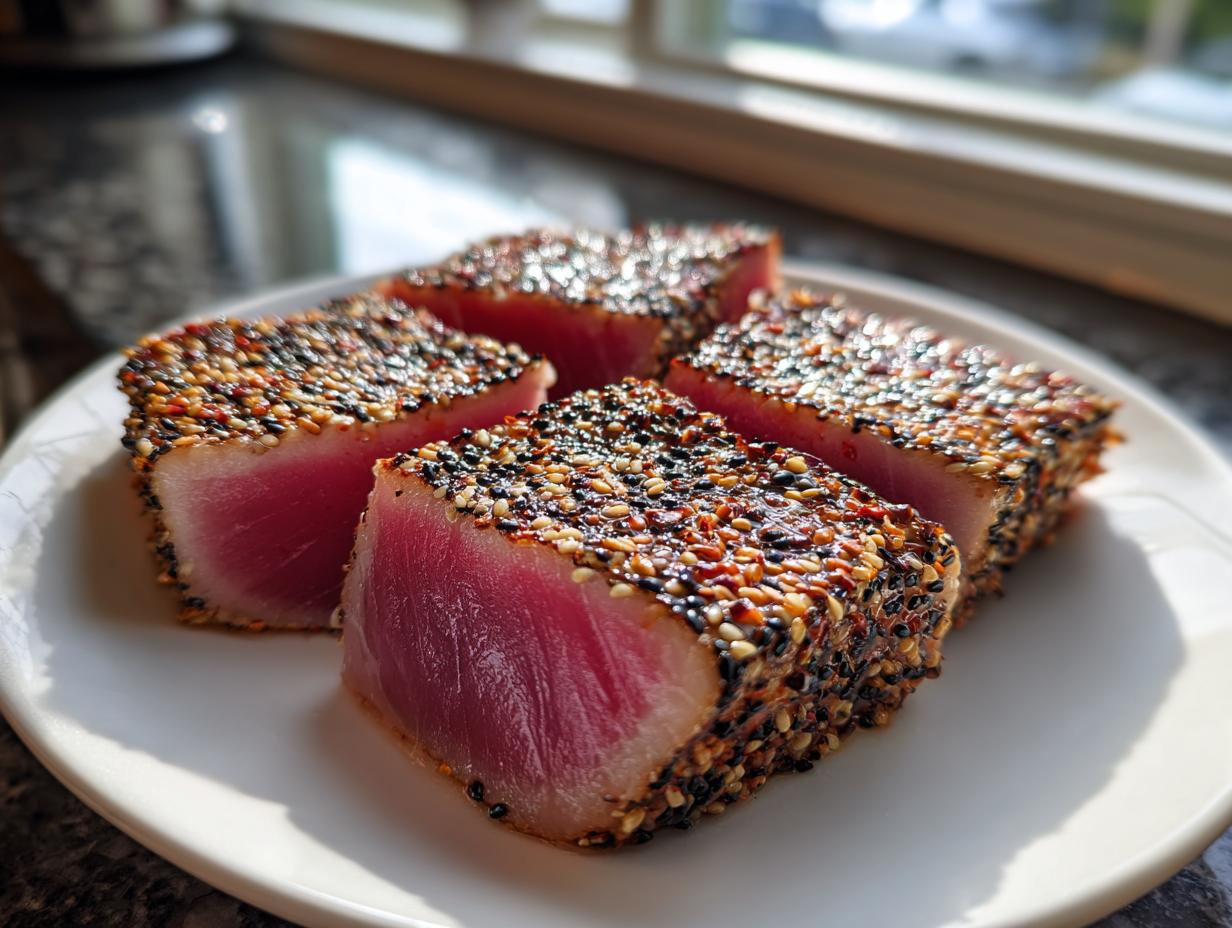
Seriously, who says you need a reservation to eat restaurant-quality fish? I used to think getting that perfect, just-barely-cooked center with a shatteringly crisp crust was some kind of secret only found at fancy gourmet spots. But nope! It’s the magic trick of mastering the sear, and that’s what we’re doing today with the absolute best Seared Ahi Tuna you’ll ever make at home. This technique is amazing because this entire incredible, healthy dinner is done in under 20 minutes. Trust me, once you nail this quick seafood recipe, your Tuesday nights are getting a serious upgrade. It really is that easy!
- Why This Seared Ahi Tuna Recipe Delivers Gourmet Tuna Results
- Gathering Ingredients for Perfect Seared Ahi Tuna
- Mastering the Marinade for Your Asian Tuna Recipe
- Technique Spotlight: Achieving the Ultimate Sesame Crust on Seared Ahi Tuna
- The High-Heat Sear: Critical Steps for Seared Ahi Tuna
- Resting and Slicing Your Seared Ahi Tuna
- Serving Suggestions for Your Asian Tuna Recipe
- Frequently Asked Questions About Seared Ahi Tuna
- Understanding the Estimated Nutrition for Seared Ahi Tuna
Why This Seared Ahi Tuna Recipe Delivers Gourmet Tuna Results
I know it seems too simple, right? But that’s the beauty of great cooking—it’s about technique, not complexity. This method consistently delivers results that taste immediately high-end. You get that beautiful, salty, sesame crust that snaps when you bite through it, giving way to that cool, buttery interior.
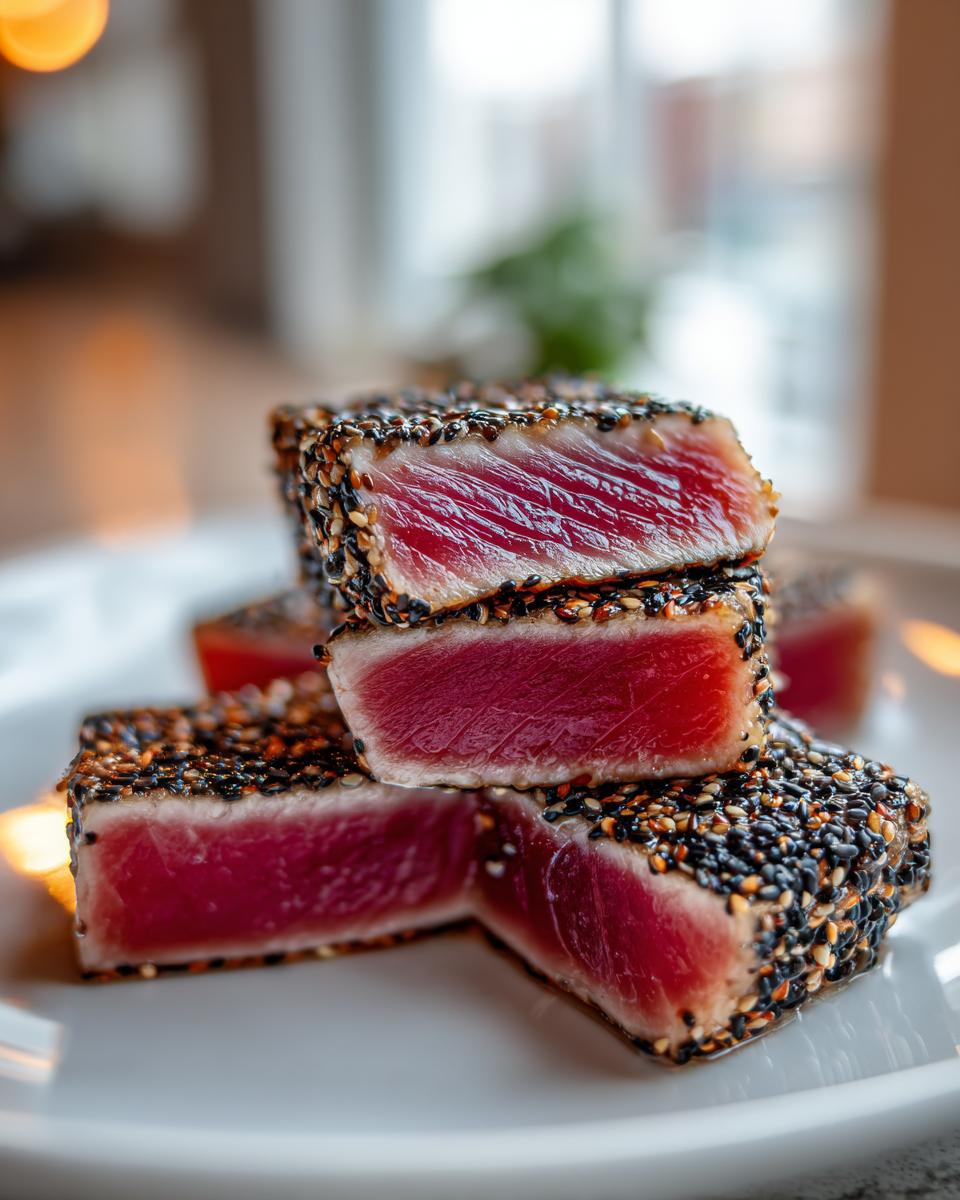
- It’s shockingly fast; we are talking minutes, not waiting around for the oven.
- The flavor investment (ginger, soy) is minimal, but the payoff is huge.
- It works because we respect the quick cooking time needed for fresh fish.
Quick Preparation for a Healthy Dinner
Seriously, the cook time on this is only about four minutes total! I clock my prep around ten minutes, so we are looking at a complete, amazing meal on the table in less than 20 minutes. If you need a genuinely quick seafood recipe that feels special, this is it. It’s packed with protein too, making it a fantastic healthy dinner.
The Importance of Sushi Grade Tuna
Listen to me on this one: if you skip quality here, you skip the entire recipe. You absolutely must buy **sushi grade tuna**. I’m talking about fresh, firm **yellowfin tuna** that looks vibrant and clean. Since we are only searing the outside, that raw center has to be trustworthy and top-notch. There’s no hiding bad fish, so splurge a little—your taste buds will thank you!
Gathering Ingredients for Perfect Seared Ahi Tuna
Okay, before we turn up the heat, we need to talk about what’s going into the bowl. For this Asian tuna recipe to sing, we need excellent quality ingredients, especially for the marinade that locks in that flavor. Don’t mess around with measurements here; a little too much soy sauce and you’ll be fighting the saltiness! Let’s get our simple lineup ready.
Ingredient Clarity and Preparation
Gather these essentials. Remember, the structure of the crust depends on having these items ready to go!
- 2 (6-ounce) sushi grade tuna steaks – look for deep red color!
- 2 tablespoons sesame oil – this is for flavor, not just cooking oil.
- 1 tablespoon soy sauce or tamari – get the good stuff!
- 1 teaspoon grated fresh ginger – please zest it right before you use it!
- 1 clove garlic, minced – minced finely, we don’t want big chunks in the marinade.
- 1/2 teaspoon black pepper – freshly cracked is best, naturally.
- 1/4 cup sesame seeds (mixed black and white) – these create that gorgeous, studded crust.
Mastering the Marinade for Your Asian Tuna Recipe
Now that everything is measured out, it’s time to build the flavor foundation. We’re leaning into those classic Asian profiles—salty, savory, and a tiny little kick of warmth. Mixing that sesame oil, soy sauce, fresh ginger, and garlic together creates a quick, vibrant bath for our fish. That ginger and garlic are crucial; they grab onto the surface of the tuna and bloom beautifully when they hit the hot pan.
You’ll need a shallow dish—one that will let you coat both sides easily. Whisk those marinade ingredients together quickly, then lay your beautiful steaks right in there. This is where you need to listen to me very carefully, because this next part can ruin your **Seared Ahi Tuna** if you mess it up!
We are only going to let this sit for ten minutes. That’s it! I know, it feels short when you’re trying to build flavor, but here’s the deal: soy sauce has salt, and the little bit of acid in the marinade starts to break down the outside texture of high-quality fish fast. If you leave it much longer than ten minutes—and I’ve tested this—it starts to get that slightly chalky, cooked texture on the edges, and we want a raw, cool center! Come check out our philosophy on not overcomplicating things—ten minutes is the perfect sweet spot for flavor penetration without changing the fish’s structure.
After those ten minutes are up, you pull them out, let the excess drip off, and immediately go into the sesame seeds. Don’t dawdle! We’re moving fast from here on out.
Technique Spotlight: Achieving the Ultimate Sesame Crust on Seared Ahi Tuna
This is the part that separates good tuna from truly stunning, gourmet tuna. Once those steaks have had their quick flavor bath, you need to dry them off just enough so the seeds stick, but not so much that you lose all the marinade goodness. Spread out your mixed black and white sesame seeds on a clean plate—make sure you use plenty, because we want full, beautiful coverage!
Take the tuna out of the marinade dish and let any major drips fall back in. Then, you’ve got to press them! Don’t just lightly roll the fish; gently but firmly press every single side—top, bottom, and both long sides—into those seeds. You really need to make sure those seeds adhere tightly. Think of it like wrapping the tuna up in a beautiful, crunchy shell. If you press hard enough, the seeds become the coating, and they toast up perfectly when they hit the screaming hot pan, creating that defining crust we want on our Seared Ahi Tuna. Once they are fully coated, they are ready for the show!
The High-Heat Sear: Critical Steps for Seared Ahi Tuna
Okay, deep breath, this is the moment of truth! We’ve marinated and we’ve crusted. Now we need fire. When I started making this, I messed up the searing temperature so many times—either the pan wasn’t hot enough, or I got nervous and threw the tuna in too early. Don’t do that!
For this to become the gourmet tuna experience you deserve, your pan has to be ripping hot. I mean, smoking hot! I swear by my cast iron skillet for this; it holds heat better than anything else. Place that heavy skillet over high heat and let it sit empty for a good five minutes. You might see a tiny wisp of smoke—that’s what we are looking for. You don’t want to add too much extra oil beyond what’s left from the marinade, because that smokes too fast and burns the sesame seeds before the fish cooks.
When you place the crusted tuna steaks down, you should hear a loud, immediate sizzle—that’s the sound of success! That intense heat shocks the outside, instantly setting the sesame crust and creating that incredible outer texture we love on our Seared Ahi Tuna.
Now for timing, this is where precision matters because we are aiming for rare! For a perfect, cool center (which is my absolute favorite way to eat it), stick to 60 to 90 seconds per side. That gives you maximum sear and minimum internal cooking. If you absolutely must have it a bit more done, go for two minutes per side at the absolute maximum for medium-rare. If you go past that, you’ve basically turned your beautiful ahi into expensive, dry swordfish. Don’t walk away; stand right there and watch those edges turn golden brown!
Resting and Slicing Your Seared Ahi Tuna
Listen, I know you just put in the work, and that fish smells incredible, but you have to show restraint for just a few more minutes! Just like a big steak, we have to let our Seared Ahi Tuna rest when it comes off that screaming hot pan. This is Step Six, and it’s non-negotiable for texture, even though it cooks so fast!
When the tuna comes out, those juices on the surface are all frantic from the high heat. If you slice it immediately, all that beautiful flavor and moisture just rushes out onto your cutting board, leaving you with slightly drier fish. Taking five minutes here lets those juices redistribute back through the meat. It’s an essential step, even for only 90 seconds of cook time!
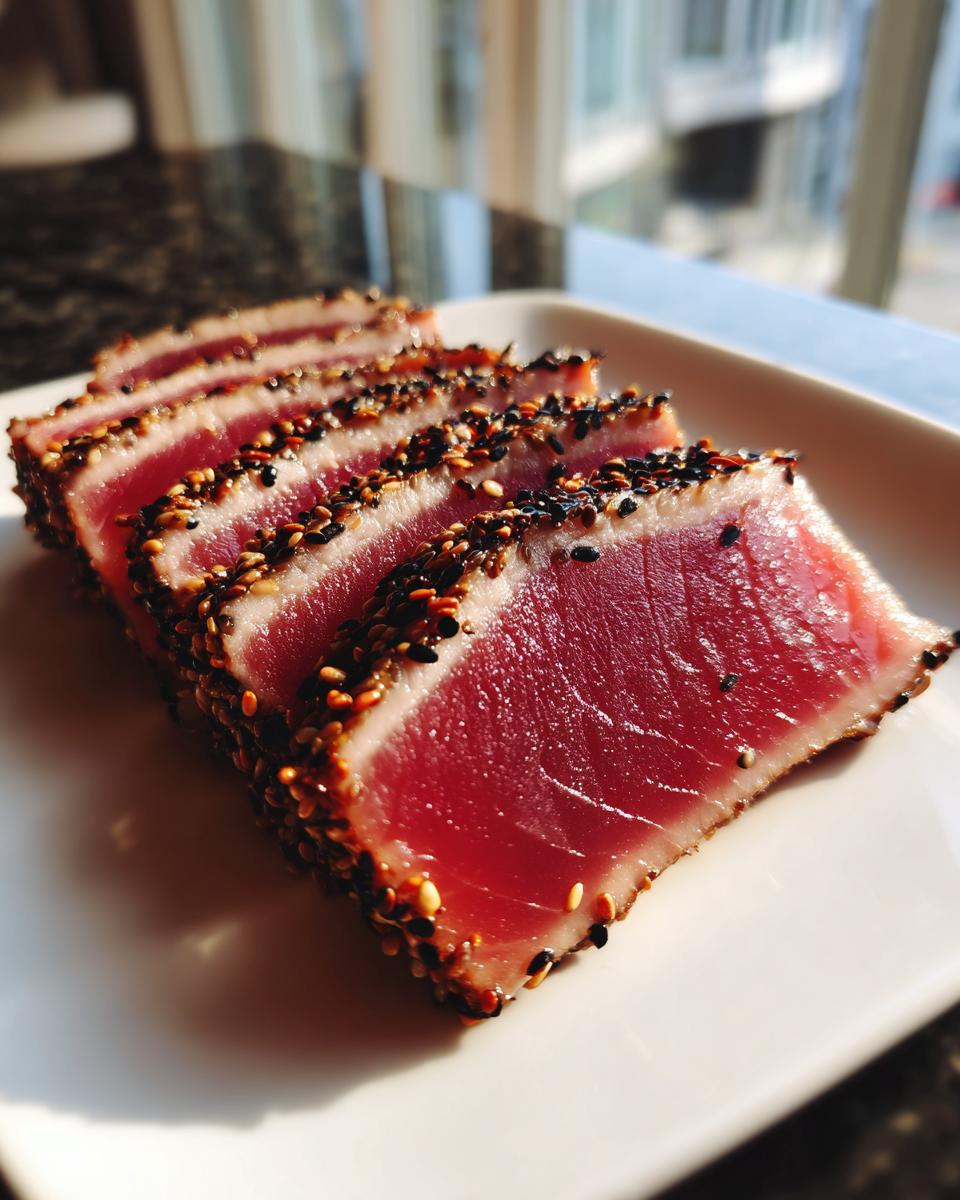
Once rested, the next big tip for tenderness is how you slice it. You absolutely must slice the tuna against the grain. Look closely at the steak—you’ll see the muscle fibers running in one direction. You want your knife going perpendicular to those lines. This shortens those fibers, making every single piece tender and easy to chew. Trust me, if you slice with the grain, you end up with little strips of slightly chewy fish, and we don’t want that!
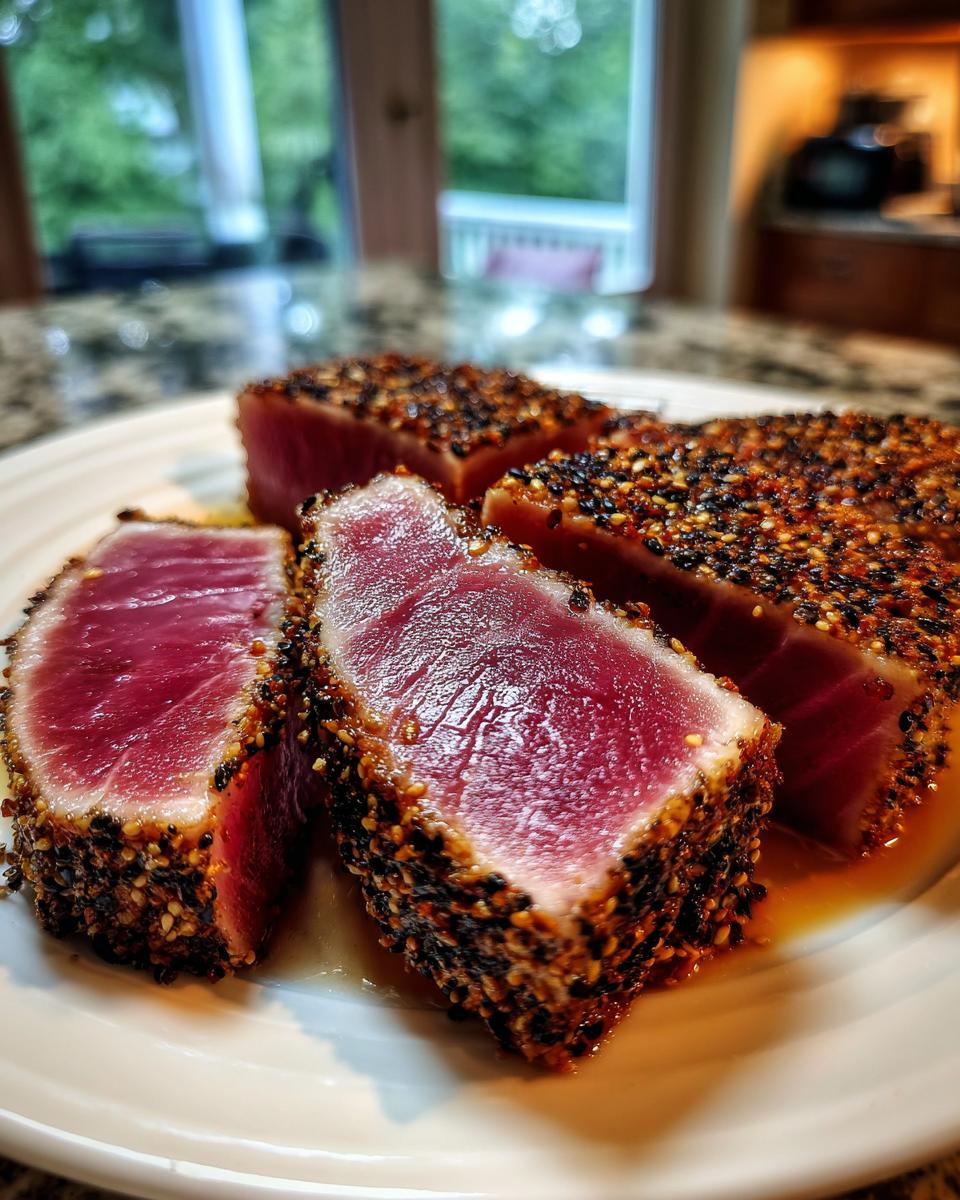
I aim for nice, generous half-inch thick slices. If you cut them too thin, they might fall apart; if you cut them too thick, you might hit that cooler center and think you undercooked it! Five minutes resting, then clean slices against the grain. That is how you serve up restaurant-worthy results every time.
Serving Suggestions for Your Asian Tuna Recipe
The beautiful thing about this Seared Ahi Tuna is that it truly stands on its own, but it desperately wants a good supporting cast! Since this is meant to be a light, incredibly flavorful, and healthy dinner, we don’t want to weigh it down with heavy starches. We want things that will let that sesame, soy, and ginger flavor really pop, you know?
I always serve mine immediately after slicing. A tiny drizzle of extra soy sauce or maybe a little homemade ginger-soy dipping sauce on the side is all you need. For sides, you can’t go wrong with something cool and bright. I’ll often quick-pickle some cucumbers—you just slice them thin and toss them with rice vinegar and a pinch of sugar for about five minutes—they get this wonderful crunch!
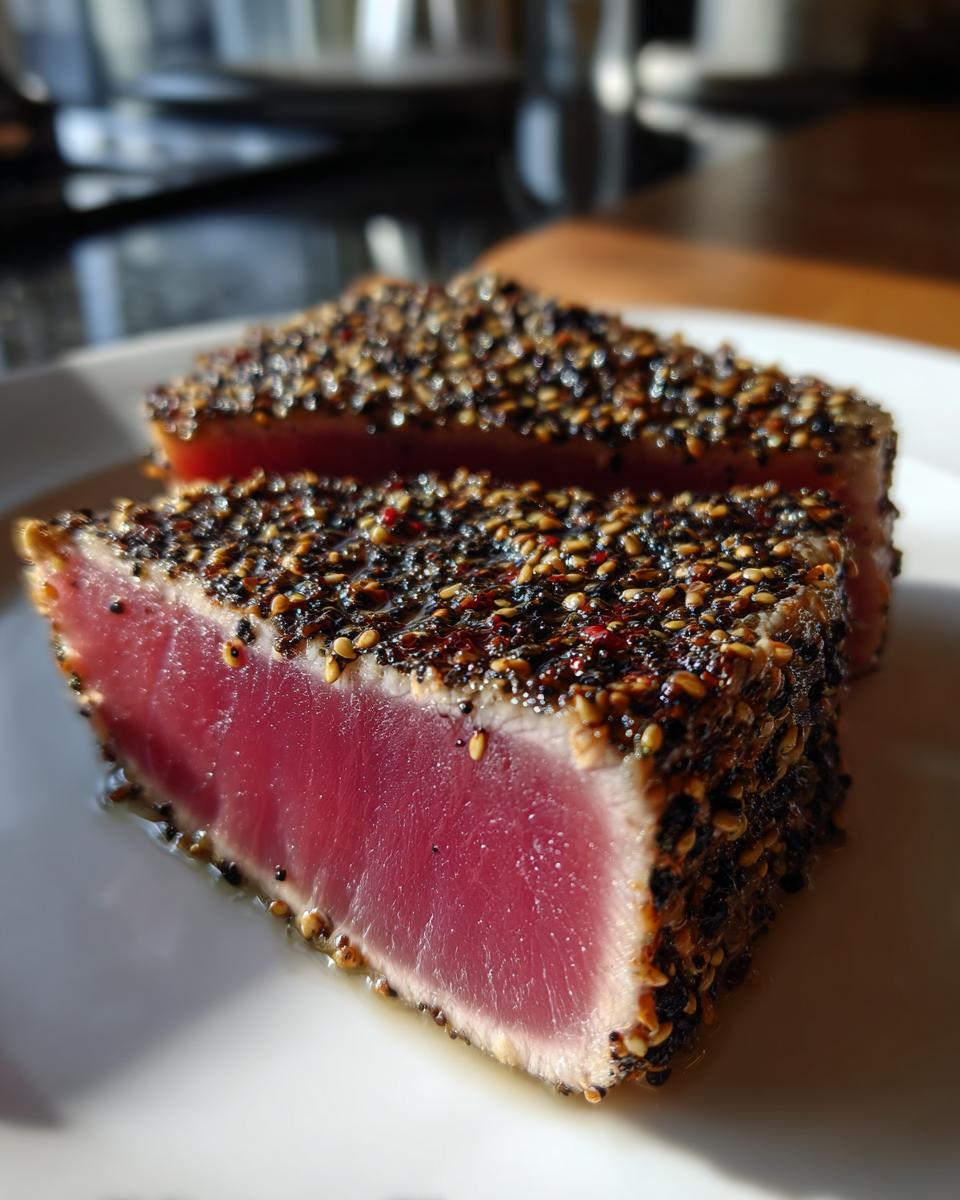
Another winner is maybe some simple, lightly seasoned steamed edamame, or even better, a bowl of brown rice topped with furikake seasoning. It keeps the whole meal light, quick, and perfectly Japanese-inspired. Remember, since this is such a healthy dinner option, keeping the sides fresh and vibrant just enhances that gourmet tuna experience!
Storage and Reheating Instructions
If you actually have leftovers—which, between my husband and me, is basically never—you need to handle them gently. This **quick seafood recipe** is built around that beautiful, cool center, so trying to reheat it is just asking for trouble. If you try to throw the slices back in a pan, that gorgeous sesame crust will burn, and the inside will turn gray and dry. Nobody wants that!
The best way to use up any remaining slices is to let them chill in an airtight container right away. The next day, these cold, cooked, rare tuna slices are actually amazing—I slice them even thinner and toss them right onto a bed of mixed greens with a light vinaigrette. It turns into a fantastic, protein-packed salad. Just remember: immediate eating is always best for that peak sear, but cold leftovers are a great backup plan for lunch!
Frequently Asked Questions About Seared Ahi Tuna
I get so many questions about this recipe, especially from folks who are trying this technique for the first time! It’s totally understandable; cooking fish this quickly can feel a little nerve-wracking. But once you know the rules for this **Asian tuna recipe**, you’re golden. Here are the top things readers always ask me!
Can I use frozen tuna for this recipe?
Oh, please don’t try to sear frozen or even partially frozen tuna! This is where we go back to needing that premium **sushi grade tuna**. If you are starting with fish that has ice crystals, you’ll never achieve high enough heat to get that snap crust; you’ll just end up steaming the fish while the ice melts in the pan. If you buy frozen, you must thaw it completely safely in the refrigerator overnight, then pat it bone dry before you attempt to marinate it. But honestly, for the best results in this **quick seafood recipe**, buy fresh!
What can I use instead of sesame oil in the marinade?
I use sesame oil because its flavor is totally iconic for this style of Seared Ahi Tuna, but if you are out, or have an allergy, you can substitute it with another neutral oil like avocado oil or grapeseed oil. However, if you make that swap, you must compensate for the missing flavor! Try increasing the ginger and garlic just slightly, or consider adding a tiny splash of rice vinegar to the marinade to brighten things up, since you’re losing the nuttiness of the sesame.
Why does my sesame seed crust keep falling off?
This usually comes down to one of two things. First, either you didn’t press hard enough into the seeds—remember, you need to *firmly* press every side to create a good seal. Second, you might have marinated it too long. If the fish sits in the liquid too long, the surface gets slippery and slick, and the seeds can’t grab hold properly. If you have any trouble, try taking the fish out of the marinade and letting it sit on a paper towel for just 30 seconds to wick up the very surface moisture before you press it into the seeds!
Is it safe if the center is completely raw?
Absolutely, yes! That rare center is the defining characteristic of a perfectly cooked Seared Ahi Tuna** steak. We use *sushi grade* fish specifically because it is safe and meant to be consumed raw in the center. If you are nervous, aim for medium-rare instead—that’s about 2 minutes per side. If you’re uncomfortable serving it raw, don’t try it! But learning to trust that cool center is part of mastering this delicious, **healthy dinner** option. If you have more technical questions about sourcing or technique, feel free to reach out to me via my contact page!
Understanding the Estimated Nutrition for Seared Ahi Tuna
I always like to give you guys a rough idea of what you’re eating when you make one of these fantastic meals! Now, remember, I’m not a registered dietitian, and the exact nutrition always depends on the brand of soy sauce you use or exactly how much oil you wipe off before searing. So, consider this the baseline nutrition estimate for one serving of this amazing Seared Ahi Tuna, assuming you follow the instructions closely.
This recipe truly shines as a healthy dinner because ahi is naturally low in everything you don’t want and high in what you do!
- Serving Size: 1 steak (approx. 6 oz. portion)
- Calories: Around 280 calories
- Protein: A whopping 32 grams! Talk about a powerhouse meal.
- Total Fat: Only about 15 grams, and most of that is the good, unsaturated fat.
- Sugar: Under 1 gram! That’s because 90% of our flavor comes from savory spices, not sugar.
It’s incredibly low carb, too, which pairs perfectly with Asian-inspired sides like steamed broccoli or cauliflower rice. This isn’t just delicious; it’s fuel for feeling great!
PrintPerfectly Seared Ahi Tuna Steaks
Learn to sear sushi-grade ahi tuna quickly for a flavorful, healthy dinner with an Asian-inspired crust.
- Prep Time: 10 min
- Cook Time: 4 min
- Total Time: 19 min
- Yield: 2 servings 1x
- Category: Dinner
- Method: Pan-Searing
- Cuisine: Asian-Inspired
- Diet: Low Fat
Ingredients
- 2 (6-ounce) sushi-grade ahi tuna steaks
- 2 tablespoons sesame oil
- 1 tablespoon soy sauce or tamari
- 1 teaspoon grated fresh ginger
- 1 clove garlic, minced
- 1/2 teaspoon black pepper
- 1/4 cup sesame seeds (mixed black and white)
Instructions
- Combine the sesame oil, soy sauce, ginger, garlic, and pepper in a shallow dish. This is your marinade.
- Place the tuna steaks in the marinade. Turn to coat both sides. Let the tuna marinate for 10 minutes at room temperature. Do not marinate longer, as the acid can start to cook the fish.
- Spread the sesame seeds on a plate. Remove the tuna from the marinade, letting excess drip off, and press all sides of the steaks firmly into the sesame seeds until fully coated.
- Heat a heavy-bottomed skillet (cast iron works well) over high heat until very hot. Add a small amount of high-heat cooking oil if needed, but the sesame oil from the marinade often suffices.
- Carefully place the sesame-crusted tuna steaks in the hot skillet. Sear for 60 to 90 seconds per side for rare (cool, raw center) or up to 2 minutes per side for medium-rare.
- Remove the tuna from the pan immediately. Let the steaks rest on a cutting board for 5 minutes before slicing against the grain into half-inch thick pieces.
Notes
- For the best sear, make sure your pan is smoking hot before adding the tuna.
- Slice the tuna against the grain to ensure tender pieces.
- Serve immediately with a side of soy sauce or a light ginger-soy dipping sauce.
Nutrition
- Serving Size: 1 steak
- Calories: 280
- Sugar: 1
- Sodium: 350
- Fat: 15
- Saturated Fat: 2
- Unsaturated Fat: 13
- Trans Fat: 0
- Carbohydrates: 4
- Fiber: 1
- Protein: 32
- Cholesterol: 75