

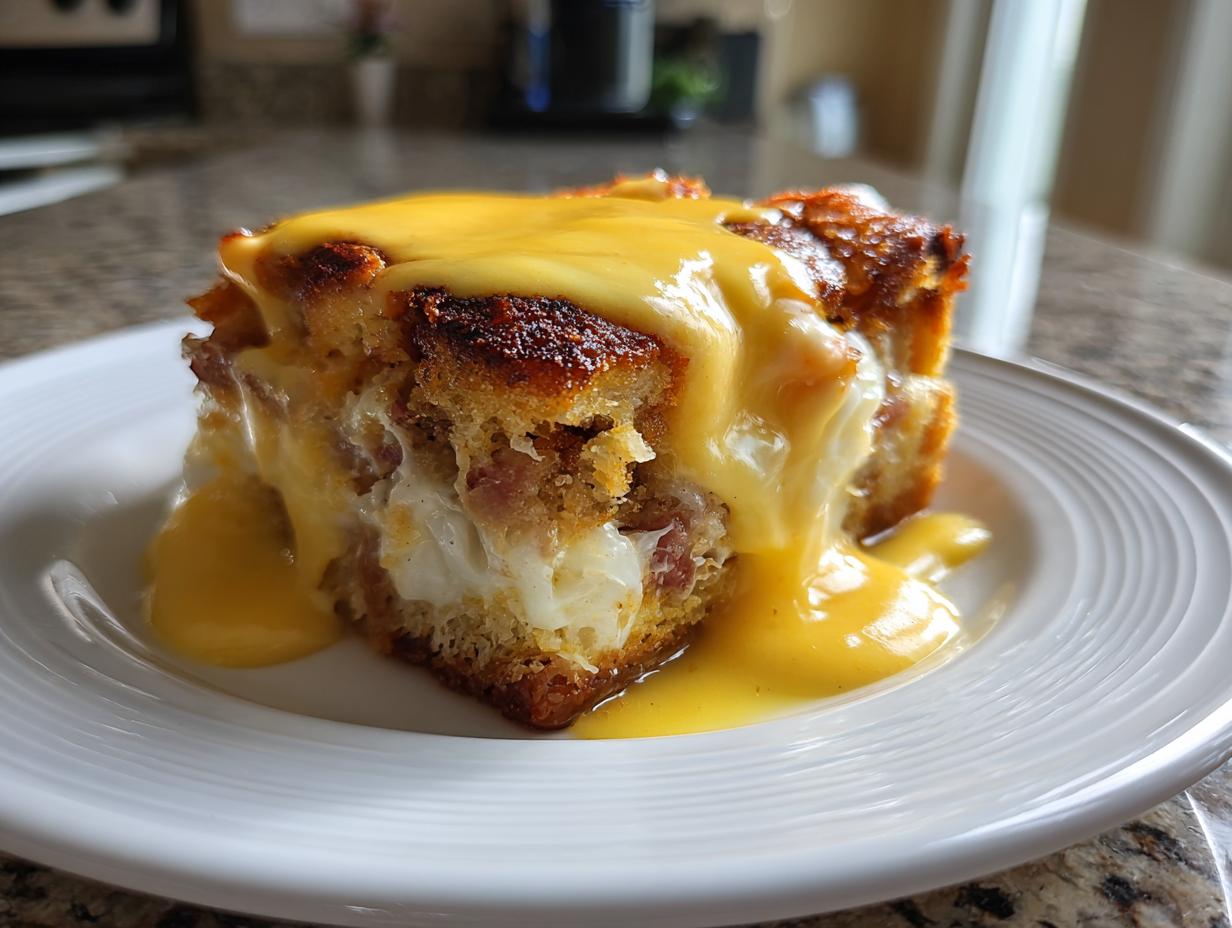
If you love the elegant, tangy bite of Eggs Benedict but dread the sheer panic of perfectly poaching twelve eggs while simultaneously entertaining guests—oh, I totally get it. Brunch should feel celebratory, not like a timed culinary test! That’s why I’m thrilled to bring you what I genuinely consider the ultimate **eggs benedict casserole**. This recipe takes that rich, comforting combination of buttery English muffins, salty ham, creamy egg custard, and that signature hint of Hollandaise, and bakes it all into one stunning, hands-off dish. My goal here at Cooking Zenith has always been to elevate your everyday cooking, and what’s better than elevating brunch? This casserole is pure genius because you assemble it the night before! For more simple morning magic, check out my collection of easy breakfast recipes.
- Why This Eggs Benedict Casserole is Your New Favorite Easy Brunch Recipe
- Essential Ingredients for Your Eggs Benedict Casserole
- Step-by-Step Instructions for the Baked Eggs Benedict
- Mastering the Quick Hollandaise Casserole Sauce
- Tips for Success with Your Eggs Benedict Casserole Recipe
- Ingredient Notes and Smart Substitutions
- Serving Suggestions for Your Savory Breakfast Bake
- Storage and Reheating Instructions for Leftover Eggs Benedict Casserole
- Frequently Asked Questions About This Make Ahead Breakfast Casserole
Why This Eggs Benedict Casserole is Your New Favorite Easy Brunch Recipe
Honestly, baking this dish changed how I approach entertaining. When you’re hosting brunch, you want to enjoy your guests, not hover over a skillet poaching eggs one by one! This **Baked Eggs Benedict** casserole captures that rich, savory flavor everyone craves but delivers it in a totally stress-free package. It’s exactly what you need when planning your make ahead brunch ideas.
Stress-Free Entertaining Breakfast: Make-Ahead Instructions
This is where the magic happens for any busy host. You mix everything up, layer it beautifully in the 9×13 dish, cover it up, and put it straight into the fridge. Seriously, that’s it! You’ve just solved half your morning stress, making this a premiere Make Ahead Breakfast Casserole. When you wake up on Sunday, you just pull it out, pop it in the oven, and let the amazing smells do the work while you sip your coffee.
Perfect for Feeding a Crowd: The Ultimate Brunch Casserole for a Crowd
Poaching eggs for eight people? No thank you! This preparation shines because it scales up like a dream. It’s truly the Ultimate Brunch Casserole for a Crowd. Everyone gets a perfectly custardy, cheesy portion, and because it bakes evenly, it comes out consistent every single time. It’s the definition of a crowd-pleaser breakfast without the fuss!
Essential Ingredients for Your Eggs Benedict Casserole
Okay, let’s talk about what goes into this masterpiece. Because this is a simple bake, the quality of these few core ingredients really shows through, which is something I always focus on here at Cooking Zenith. You are essentially building three parts: the base (which soaks up the custard), the savory filling, and that wonderful egg mixture that binds everything together. Don’t skip the Dijon mustard in the custard—it’s my little secret for adding that essential *zing* Eggs Benedict needs!
Gather everything up before you even start greasing that dish. Here is exactly what you’ll need to capture that classic flavor:
- Twelve large eggs—and yes, they all need to be used!
- Two cups of whole milk. I stick to whole milk because the fat content is necessary for that rich, almost creamy custard texture.
- One teaspoon of Dijon mustard. Trust me, it wakes up the eggs!
- Half a teaspoon of salt and a tiny pinch of black pepper.
- One 10-ounce package of Canadian bacon or ham, chopped up small.
- One 12-ounce package of English muffins that you’ve cubed. Don’t use standard sandwich bread; the nooks and crannies of the muffin are what capture all that lovely custard.
- Two cups of shredded Swiss cheese. Swiss brings that slight nuttiness we love.
- Half a cup of shredded sharp cheddar cheese for the top layer. This is for gorgeous color and a little extra sharpness when it melts!
And because we’re talking about the full experience, you’ll need the components for the Quick Hollandaise Sauce we’ll make later. Keep these handy!
- Half a cup (that’s one whole stick!) of unsalted butter—melted low and slow.
- Three large egg yolks.
- One tablespoon of fresh lemon juice. Fresh is non-negotiable here, friends!
- Just a little pinch of salt and cayenne pepper for seasoning.
Getting these ingredients ready at the start makes the whole layering process so smooth. It’s all about setting yourself up for that overnight success!
Step-by-Step Instructions for the Baked Eggs Benedict
Alright, let’s get down to business! This is where you transform those pretty ingredients into something magnificent. Since this is designed as a make-ahead breakfast casserole, the first few steps are all about building the layers perfectly, knowing that the real work is done once it sits chilling overnight. Don’t rush the custard whisking; make sure that Dijon mustard is totally incorporated. Everything else just falls into place after that initial mixing step, leading you to that perfect slice of **eggs benedict casserole** later.
Assembling the Overnight Egg Bake Layers
First things first—grab that 9×13 dish and grease it up well. We don’t want anything sticking after all this lovely effort! We are layering, sandwich-style, but in a casserole. Start by laying down half of your cubed English muffins across the bottom. They soak up the best flavors, so make sure they cover the base pretty evenly!
Next, sprinkle half of your chopped Canadian bacon or ham right over those muffins. Then, sprinkle half of that beautiful shredded Swiss cheese on top of the meat. Now comes the liquid gold: pour exactly half of your egg custard mixture evenly over those layers. Try to let it seep down into all those little nooks and crannies in the muffins.
Repeat that whole process! The second layer gets the rest of the muffins, the rest of the ham/bacon, and the rest of the Swiss cheese. Finally, pour that remaining custard gently over the top layer. Now, you must be diligent here: cover that whole dish *tightly* with plastic wrap. Pop it into the fridge for at least four hours, but honestly, overnight is the ticket for the best results in this Overnight Egg Bake.
Baking the Perfect Eggs Benedict Casserole
When morning comes and it’s time to eat, preheat your oven to 350 degrees Fahrenheit. Take that plastic wrap off the dish—it should look swollen and ready to go! Before it hits the heat, sprinkle the cheddar cheese evenly across the entire surface. That cheddar is going on top because we want it bubbly and golden brown while the Swiss melts underneath.
Bake it uncovered for about 45 to 55 minutes. You’re looking for two things: it needs to be set solid in the center (no wobble!) and the top should be golden. If you’re worried, give it the toothpick test. Remember to keep an eye on it, especially if you are baking it straight from the fridge, as it might need a few extra minutes to fully heat through.
Mastering the Quick Hollandaise Casserole Sauce
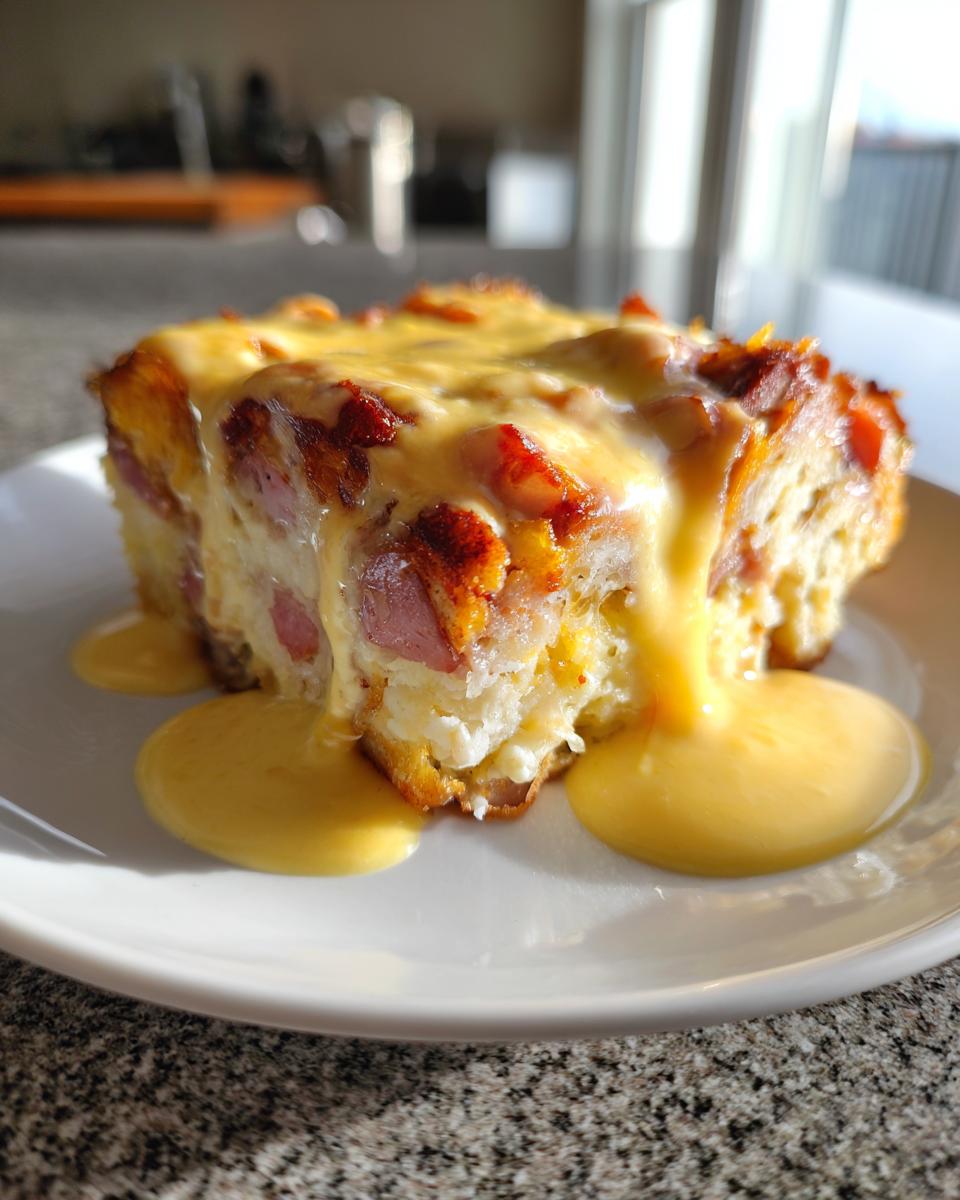
You’ve got your glorious, custardy bake out of the oven—now for the crowning glory! I know what you’re thinking: Hollandaise? That’s professional chef territory. Nope! Not today. We are making a quick, foolproof version right while the casserole rests, ensuring you get that necessary tangy richness without the fuss. This sauce is essential for turning a great **Baked Eggs Benedict** into an absolute showstopper. It brings that bright, lemony flavor that cuts through the richness of the egg and cheese layers in your **eggs benedict casserole**.
We’re basically making a stabilized emulsion here, and it’s easier than you think, especially if you have a small saucepan and a bowl that fits snugly over top. For more simple sauce mastery, you can check out my guide on easy homemade teriyaki sauce. This technique teaches you the basics of emulsifying fat and eggs, which is great kitchen knowledge!
Tips for a Smooth Hollandaise Casserole Sauce
To start, melt your stick of butter gently in a separate small saucepan. We want it melted and warm, but not sizzling hot. Now, set up your double boiler: a small saucepan with just a splash of water in it, simmering gently. Place your heatproof bowl on top—and stress alert: make absolutely sure the bottom of that bowl isn’t touching the water! If it is, that water will boil too aggressively and scramble your yolks instantly.
Whisk those three yolks in the bowl until they look a little paler and thicker—this takes about three minutes. Now, whisk constantly, and start drizzling in that warm butter, *super* slowly at first, just drop by drop. This slow, steady drizzle is the real secret to a smooth sauce. Once you get about half the butter in and the sauce looks thick and creamy, you can speed up the drizzle a tiny bit. Once all the butter is incorporated, whisk in your fresh lemon juice, salt, and that whisper of cayenne. If your sauce ever looks like it’s separating, go ahead and whisk in a tiny splash of warm water—it helps bring everything back together, I promise!
Tips for Success with Your Eggs Benedict Casserole Recipe
I want to make sure that when you pull this casserole out of the oven, it tastes like you spent all morning fussing over it, even though we know you didn’t! Success with this dish is really about respecting the steps, especially that overnight chill time. Don’t try to bake it warm, or the muffins won’t absorb that custard properly, and you’ll end up with a slightly soggy bottom layer. We want fluffy, custardy layers, not a bread pudding!
Also, for perfectly gorgeous plating, let the casserole sit on the counter for about 10 to 15 minutes after it comes out of the oven before you start slicing. This lets those egg proteins tighten up just a touch, giving you those clean squares you dream about for your easy casserole bake presentation. It’s worth the wait, I promise!
Making the Joanna Gaines Casserole Variation
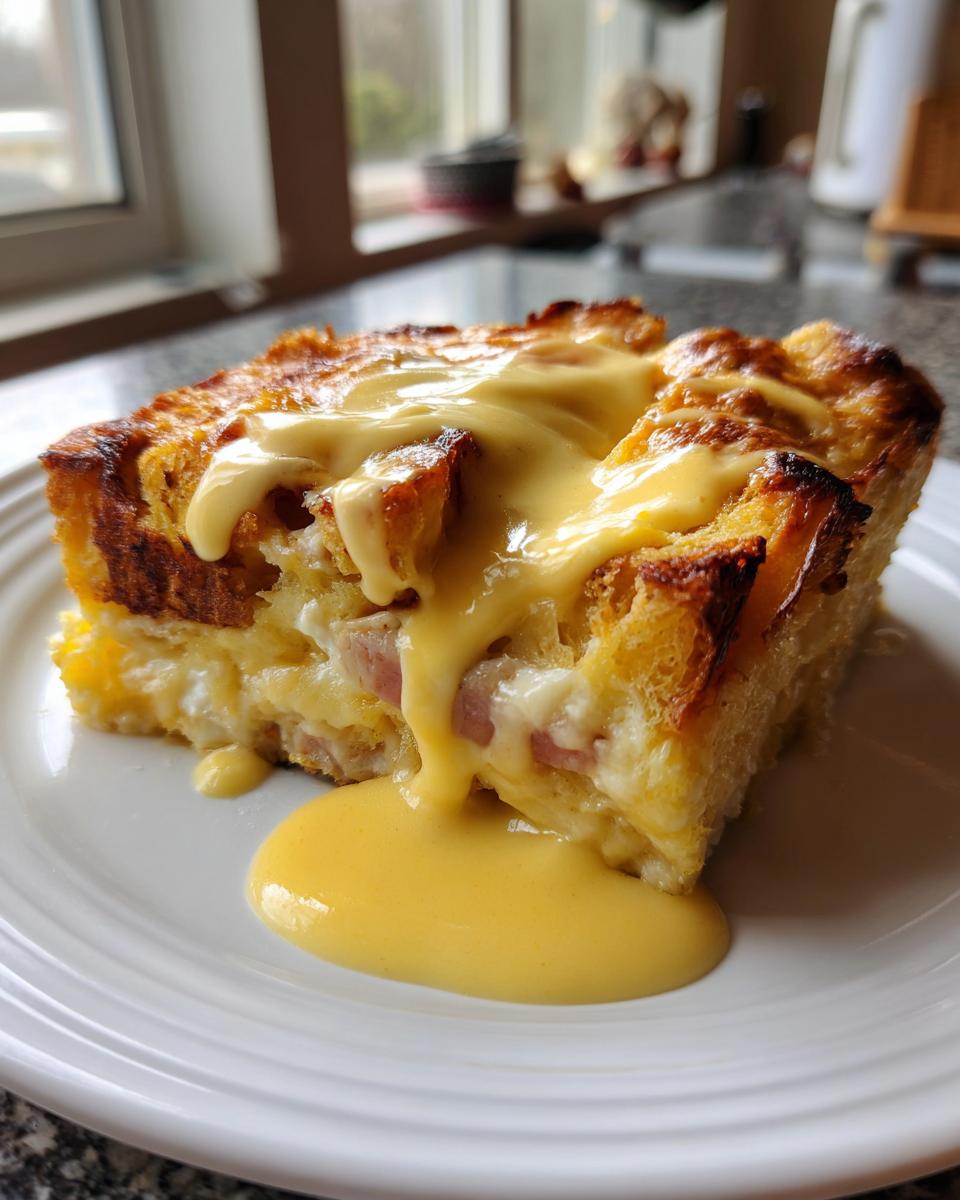
If you’ve heard chatter about the Joanna Gaines Casserole style, you know her recipes lean into that rich, comforting Southern brunch vibe. Her version often calls for sausage instead of Canadian bacon, and I think that’s a fantastic swap if you’re feeling it! If you go that route, make sure you brown the sausage first, drain off every drop of grease, and maybe add just a touch less butter to your Hollandaise, since sausage is typically a fattier meat than lean Canadian bacon.
Whatever meat you choose—ham, bacon, or sausage—the key is keeping the custard the same. That balance of Dijon, eggs, and milk is what provides that classic Eggs Benedict base that stands up beautifully to the rich sauce.
Ingredient Notes and Smart Substitutions
When you’re making comfort food like this, people often ask me: “Aria, what if I don’t have exactly what you listed?” That’s a question I love answering because it shows you’re already starting to cook with intuition! For this **eggs benedict casserole** recipe, we have three key areas where substitutions work beautifully.
First up is the meat. Canadian bacon is absolutely the most traditional choice. It’s lean, it has that salty, slightly sweet cured flavor that perfectly mimics the texture of the round slice you get on the classic dish. But if all you have is regular deli ham or even thin-cut bacon that you’ve cooked crisp, go for it! If you’re using regular bacon, make sure you cook it until crisp and drain off that excess grease really well before layering it in. For a truly decadent, specialized brunch, I’ve successfully swapped the ham for finely chopped smoked salmon, which I layer in *after* the casserole comes out of the oven, just before serving with the sauce. That’s a real treat!
Next, let’s talk cheese. I specified Swiss and Cheddar because their flavors play so well together—sharpness from the cheddar, nutty sweetness from the Swiss. If you hate Swiss, don’t panic! Gruyère is a fantastic, slightly richer substitute that melts like a dream. You could even use Mozzarella, but you’ll lose some of that depth of flavor that makes this dish feel special. Low-moisture Jack cheese is another great melter if you need to keep the flavor profile milder.
Finally, about those English muffins. Please, please, please try not to swap them for sliced white bread unless you absolutely have to. The porous, rugged texture of the English muffin is what allows it to hold up structurally to the custard bath overnight. Regular bread tends to turn to mushy paste. If you’re using stale bagels instead of muffins, cube them small and maybe add 5 extra minutes to the baking time, as they are denser! It’s all about texture management, my friends.
Serving Suggestions for Your Savory Breakfast Bake
Now that you have this unbelievably easy, gorgeous, make-ahead **Savory Breakfast Bake** ready to go, the next big question is: what do we serve alongside it? Because this casserole is so rich—with the eggs, the ham, and that essential tangy Hollandaise sauce—I always try to pair it with something bright, fresh, and maybe a little bubbly to cut through all that comfort.
You deserve to relax on brunch day! You’ve earned it by putting the prep in the night before, so let’s keep the rest of the meal simple and elegant. Think light sides that complement the main event rather than compete with it.
For a perfect centerpiece, pair your slice of casserole with a simple platter of fresh fruit. I swear by a mix of berries—strawberries, blueberries, and maybe some sliced kiwi. The slight tartness of the fruit is the perfect palate cleanser after the richness of the egg and cheese.

If you want something green, skip the heavy dressings. A tiny, peppery arugula salad tossed lightly with just olive oil, lemon juice, and maybe a few shaved Parmesan curls works wonders. It’s crunchy, it’s fresh, and it looks absolutely gourmet on the table.
And since it’s brunch, we need a signature drink, right? If you’re keeping it non-alcoholic, try pairing this with freshly squeezed orange juice or maybe even a vibrant cranberry spritzer. For something a little more festive, you can’t go wrong with simple Mimosas or Bellinis. I actually have a great guide on refreshing drink recipes if you’re looking for some fun, complex mocktails or cocktails to round out your spread!
Remember, the beauty of this **eggs benedict casserole** is its simplicity. Keep the sides simple too, and you’ll look like the hostess with the mostest without breaking a sweat!
Storage and Reheating Instructions for Leftover Eggs Benedict Casserole
This is the part I love most about turning a classic into a fantastic **Holiday Breakfast Casserole**: the leftovers! Seriously, if you’re making this for a crowd, you’ll likely have some the next day, and honestly? It’s still fantastic. But we need to treat this casserole gently when storing and reheating it so that gorgeous custard texture doesn’t turn rubbery on us.
The key to keeping this delicious **eggs benedict casserole** fresh is proper storage. Once the casserole has cooled down completely—and I mean completely, don’t rush this part—cover the dish tightly with plastic wrap, making sure the wrap doesn’t stick directly to the cheesed top if you can help it. If you’ve already cut slices, transfer them to an airtight container. Stored correctly in the refrigerator, this bake will stay wonderfully creamy for about three to four days. That’s four mornings you get to wake up to high-quality brunch with zero effort!
For reheating, remember that the oven is always your friend when it comes to creamy baked dishes. If you’re reheating the entire casserole dish, preheat your oven to 325 degrees Fahrenheit. Just like when we baked it initially, cover it with foil this time—this prevents the top from getting too dark while the center reheats evenly. Bake it for about 20 to 25 minutes, or until it’s hot all the way through. Pro tip: If you are reheating a single slice, you can gently place it in a toaster oven or a regular oven for about 10 minutes at 350°F.

Now, about the microwave. I know, I know, sometimes you’re in a rush. You *can* microwave leftovers, but you have to be super careful, or that delicate egg texture will get tough and squeaky. If you must use the microwave, place a single slice on a microwave-safe plate and cover it loosely with a damp paper towel—this traps just enough steam to keep things from drying out. Heat in 30-second bursts until it’s warm. It won’t have the same fluffy perfection as the oven method, but it will absolutely scratch that craving for a rich, protein-packed breakfast!
If you ever want to try storing another type of bake for later, I’ve got some great tips on saving leftover cheese dishes, like my recipe for easy cheesy taco pinwheels; the principles for keeping things moist are very similar!
Frequently Asked Questions About This Make Ahead Breakfast Casserole
I know you’ve got questions! When you take a classic like Eggs Benedict and turn it into an easy, shareable, **Make Ahead Breakfast Casserole**, sometimes you need a little reassurance on the details. I’ve gathered some of the questions I get most often about this recipe so you can feel 100% confident assembling it tonight! For more reliable morning meals, remember to browse all my easy breakfast recipes.
Can I use sausage instead of ham in the eggs benedict casserole?
Oh, absolutely! That substitution is actually what makes it feel a little more like that famous Easy Brunch Recipe style often attributed to Joanna Gaines. If you choose sausage, I highly recommend using mild breakfast sausage. You must brown it thoroughly first, drain off every speck of grease possible, and let it cool slightly before layering it into the casserole. Sausage is usually richer than Canadian bacon, so you’ll get an even deeper, more comforting flavor profile. It’s a winner either way!
Is this recipe freezer friendly?
That’s a smart question, especially if you’re planning for a busy holiday week! Yes, this is a fantastic candidate for the freezer, but only when it’s *unbaked*. Assemble the entire **Overnight Egg Bake** exactly as the recipe says—muffins, ham, cheese, custard, everything. Before you wrap it in plastic for the fridge, wrap the entire dish tightly in two layers of aluminum foil, or transfer the assembled contents into a heavy-duty freezer bag. It lasts beautifully for up to two months in the freezer.
When you’re ready to cook it, take it out the night before and let it thaw slowly in the refrigerator. Then, proceed with the baking instructions you normally would! If you are in a real rush and need to bake it directly from frozen, you’ll need to cover it with foil and bake it at 350°F for about 90 minutes before uncovering and finishing it off. It takes patience, but it’s so worth it for a zero-effort morning!
Can I really skip the Hollandaise sauce?
You *can*, but let me tell you why I really prefer we don’t! The Hollandaise sauce is what pulls the entire experience back to that classic Eggs Benedict flavor. Without it, you just have a lovely ham and cheese breakfast puff. However, if you are truly pressed for time or just not feeling egg yolks that morning, you can substitute it. Since this is a rich casserole, you need acidity to cut through it. Try skipping the complex sauce but topping each serving with a tiny wedge of fresh lemon and maybe a sprinkle of fresh chives. That little bit of acid brightens everything up enough to make it satisfying!
PrintThe Ultimate Make-Ahead Eggs Benedict Casserole (Easy Hollandaise Option)

Prepare this easy Eggs Benedict Casserole the night before to simplify your next brunch. This recipe captures the classic flavors of eggs, ham, and English muffins in a comforting baked dish, perfect for feeding a crowd.
- Prep Time: 20 min
- Cook Time: 55 min
- Total Time: 1 hr 15 min
- Yield: 8 servings 1x
- Category: Brunch
- Method: Baking
- Cuisine: American
- Diet: Vegetarian
Ingredients
- 12 large eggs
- 2 cups whole milk
- 1 teaspoon Dijon mustard
- 1/2 teaspoon salt
- 1/4 teaspoon black pepper
- 1 (10-ounce) package Canadian bacon or ham, chopped
- 1 (12-ounce) package English muffins, cubed
- 2 cups shredded Swiss cheese
- 1/2 cup shredded sharp cheddar cheese
- For the Quick Hollandaise Sauce:
- 1/2 cup (1 stick) unsalted butter
- 3 large egg yolks
- 1 tablespoon fresh lemon juice
- Pinch of salt and cayenne pepper
Instructions
- Grease a 9×13 inch baking dish.
- In a large bowl, whisk together the eggs, milk, Dijon mustard, salt, and pepper until fully combined. This forms your custard base.
- Arrange half of the cubed English muffins in a single layer in the prepared baking dish.
- Sprinkle half of the chopped Canadian bacon and half of the Swiss cheese over the muffins.
- Pour half of the egg custard mixture evenly over the layers.
- Repeat the layering process with the remaining English muffins, bacon, and Swiss cheese. Pour the remaining custard over the top.
- Cover the dish tightly with plastic wrap. Refrigerate for at least 4 hours, or preferably overnight.
- When ready to bake, preheat your oven to 350 degrees Fahrenheit. Remove the plastic wrap.
- Sprinkle the cheddar cheese evenly over the top of the casserole.
- Bake uncovered for 45 to 55 minutes, or until the casserole is set in the center and lightly golden brown.
- While the casserole bakes, prepare the quick Hollandaise sauce. Melt the butter in a small saucepan over low heat.
- In a heatproof bowl set over a saucepan of simmering water (a double boiler), whisk the egg yolks until they thicken slightly, about 3 minutes. Do not let the water touch the bottom of the bowl.
- Slowly drizzle the melted butter into the yolks while whisking constantly until the sauce emulsifies and thickens.
- Remove from heat and whisk in the lemon juice, salt, and cayenne pepper.
- Slice the casserole and serve immediately with a spoonful of the homemade Hollandaise sauce over each serving.
Notes
- For a make-ahead option inspired by Joanna Gaines, assemble the entire casserole, cover, and refrigerate overnight. Add 5-10 minutes to the baking time if baking directly from the refrigerator.
- If you prefer a less rich sauce, substitute the Hollandaise with a simple creamy white sauce seasoned with a touch of lemon zest and white pepper.
- This recipe is excellent for feeding a crowd; you can easily double the ingredients and use two 9×13 dishes for holiday brunch.
Nutrition
- Serving Size: 1 slice
- Calories: 450
- Sugar: 5
- Sodium: 750
- Fat: 30
- Saturated Fat: 16
- Unsaturated Fat: 14
- Trans Fat: 1
- Carbohydrates: 25
- Fiber: 2
- Protein: 24
- Cholesterol: 250