Traditional Lacto-Fermented Pickles: A Beginner’s Guide
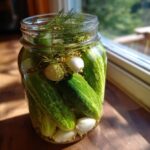
Learn how to make naturally fermented pickles using a simple salt brine. This guide covers the step-by-step process for lacto fermentation, ensuring you achieve crisp, flavorful, probiotic pickles at home.
- Prep Time: 20 min
- Cook Time: 0 min
- Total Time: 20 min (plus 5-10 days fermentation)
- Yield: Approximately 4 quarts 1x
- Category: Preserves
- Method: Fermentation
- Cuisine: American
- Diet: Vegan
Ingredients
Scale
- 3 pounds fresh pickling cucumbers (Kirby or similar)
- 1 gallon filtered, non-chlorinated water
- 3 tablespoons pickling salt (non-iodized)
- Optional: 4 cloves garlic, peeled
- Optional: 1 teaspoon black peppercorns
- Optional: 1 teaspoon fresh dill heads or 1 tablespoon dill seed
Instructions
- Clean your cucumbers thoroughly. Trim the blossom end off each cucumber, as this end contains enzymes that can cause softness.
- Prepare the brine: Dissolve the 3 tablespoons of pickling salt into 1 gallon of filtered water. Stir until the salt is completely dissolved. This creates a 2.25% brine solution, which is ideal for vegetable fermentation.
- Prepare your jars: Use clean, wide-mouth glass jars (quart or half-gallon size). If using, place the garlic, peppercorns, and dill into the bottom of each jar. Pack the cucumbers tightly into the jars, standing them upright if possible.
- Pour the prepared brine over the cucumbers, ensuring they are completely submerged. Leave at least 1 inch of headspace at the top of the jar.
- Weigh the cucumbers down: Place a fermentation weight (glass or ceramic) on top of the cucumbers to keep them below the brine level. This prevents exposure to air, which can lead to spoilage.
- Cover the jar: If using an airlock lid system, secure it now. If using a standard lid, screw it on loosely to allow gases to escape, or cover the opening with a piece of cheesecloth secured with a rubber band.
- Ferment at room temperature: Place the jars in a cool, dark spot away from direct sunlight (65 to 75 degrees Fahrenheit is ideal).
- Monitor the process: Within 24 to 48 hours, you should see small bubbles forming, indicating active fermentation. The brine may become cloudy; this is normal for lacto fermented pickles.
- Taste test: Begin tasting the pickles after 3 days. The fermentation time depends on the temperature; warmer rooms ferment faster. For a crisp, slightly sour pickle, fermentation usually takes 5 to 10 days.
- Store: Once the flavor is to your liking, remove the weights, seal the jars tightly, and transfer them to the refrigerator. Refrigeration stops the fermentation process.
Notes
- Use only non-iodized salt. Iodine can inhibit the beneficial bacteria growth needed for successful fermentation.
- If you see white, harmless yeast film (kahm yeast) on the surface, skim it off. If you see fuzzy, colored mold, discard the batch.
- For the best texture, use fresh, firm cucumbers picked within 24 hours of making the pickles.
- If you are new to this, start with a smaller batch to understand the process before committing to a large volume.
Nutrition
- Serving Size: 1 pickle
- Calories: 5
- Sugar: 0.2
- Sodium: 150
- Fat: 0.1
- Saturated Fat: 0.0
- Unsaturated Fat: 0.1
- Trans Fat: 0.0
- Carbohydrates: 1.2
- Fiber: 0.3
- Protein: 0.2
- Cholesterol: 0
Find it online: https://cookingzenith.com/best-fermented-pickles-recipe-guide/